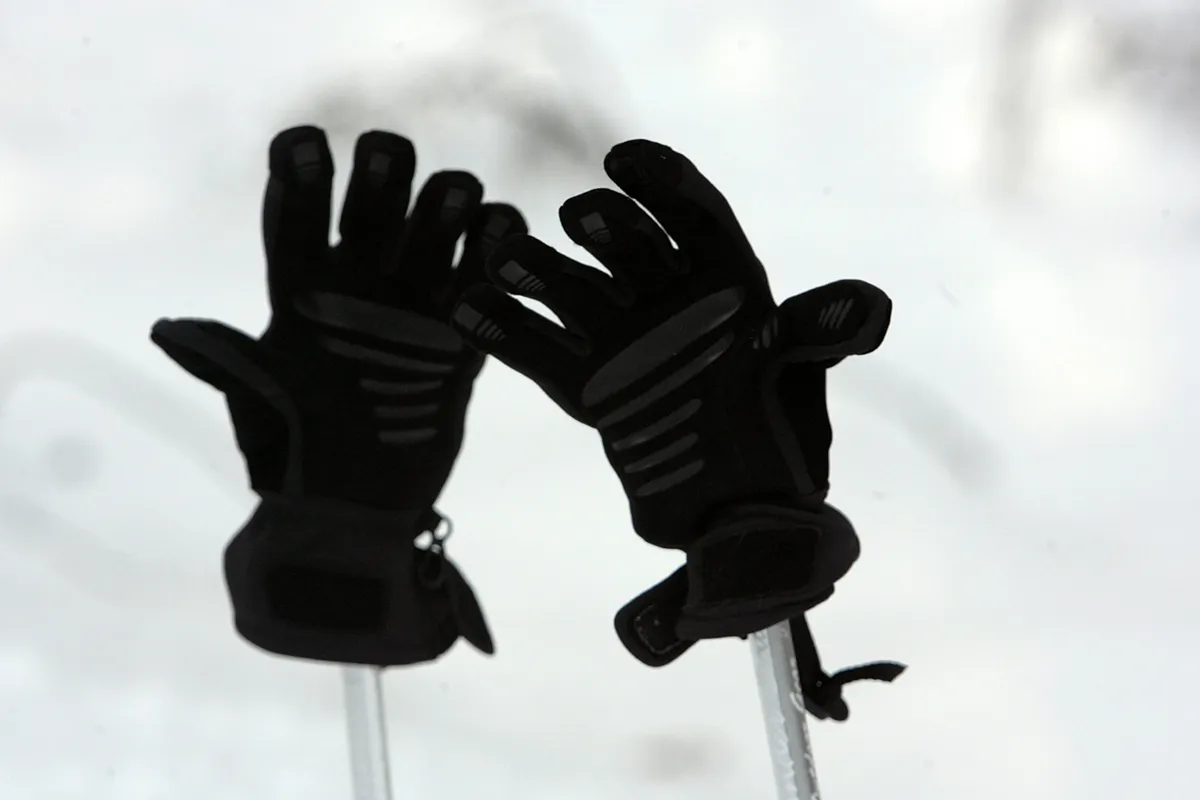
Gloves collect sweat inside and dirt outside, then often spend the trip home stuffed into a bag. Give them a chance to dry after every ski day. When they need cleaning, start with the care label, because leather, insulated fabric, and waterproof inserts can need different treatment.
You don’t need a shelf full of products. You need a suitable cleaning method, enough drying time, and the right treatment for the material if its surface stops shedding water.
Check what you’re cleaning
Look at the palm as well as the back of the glove. A fabric glove with leather trim needs a method that suits both. Removable liners may have separate washing instructions, and heated gloves have electrical components that require their own care.
If the label is missing, find the instructions for that exact model. Don’t assume a glove is machine washable because its outside looks synthetic.
Start with dirt you can remove locally
Brush away loose grit and check whether a damp cloth will remove the dirty patch. For an otherwise clean glove, that may be enough. If the lining is sweaty or persistently smelly, clean it using the permitted method rather than covering the odor with another product.
Remove detachable liners where instructed. Don’t pull a fixed lining inside out or force apart layers that are meant to stay together.
Washing fabric and insulated gloves
Use only the cleaner and wash method allowed by the care instructions. If hand washing is specified, work gently and rinse as directed. If machine washing is allowed, follow the stated temperature and cycle.
Avoid fabric softener and harsh stain treatments unless the glove maker specifically allows them. More detergent isn’t better; use the recommended amount. Don’t twist or wring a wet glove. Press out excess water gently if the instructions permit it.
For heated gloves, follow the model’s electrical-care directions before doing anything with water. Removing a battery doesn’t automatically make the rest of the glove washable.
Leather needs its own treatment
Start with the glove maker’s leather-care guidance. Some leather gloves need little more than gentle surface cleaning and a compatible balm. Others have particular soap or conditioning requirements.
Match the treatment to the leather type. A balm intended for one hide or finish may darken, stiffen, or mark another. Check whether it should be applied to damp or dry leather, and use a small amount as directed.
Suede and nubuck need their own suitable products. A general leather wax isn’t a substitute for checking the finish.
Give the inside time to dry
Follow the drying instructions and keep gloves away from direct heat such as a radiator, stove, or heater vent. Don’t tumble dry unless the garment label permits it.
Open the cuffs to allow airflow and dry removable liners separately. The outside may feel dry while the fingertips or insulation are still damp, so check inside before packing them away. Thick gloves can take much longer than thin liners.
If you ski on consecutive days, a dry spare pair is useful. It also removes the temptation to hurry a wet pair onto a heater. Before packing a cleaned glove, reach into each finger and check the lining. If a fixed liner has shifted and you can’t get your fingers into place, stop pulling and ask about repair rather than tearing its attachment points.
When water stops beading
The outer fabric’s water-repellent finish is separate from a waterproof insert inside the glove. Cleaning may help the surface shed water again. If it doesn’t, use a glove-compatible treatment approved for the materials.
A treatment won’t mend worn-through leather, a tear, or a failing seam. Look closely at repeatedly wet areas and ask about repair if you find damage. Our waterproof outerwear care guide explains the same distinction for jackets and pants.
Frequently asked questions
How often should I wash ski gloves?
Clean them when dirt or sweat needs removing, using the care label’s method. Dry them after each use and spot-clean suitable areas between washes. There isn’t one washing schedule that suits every glove and amount of use.
Can I put ski gloves in the washing machine?
Only if the care label permits it. Leather, mixed-material gloves, fixed insulation, and electrical components can change the requirements. Use the specified cycle and cleaner rather than copying instructions from another pair.
Can I put ski gloves in the dryer?
Only when the care label explicitly allows it, using the stated setting. Otherwise, allow airflow at room temperature and keep them away from direct heaters. Check the fingertips and lining before storing them.
How do I get the smell out of ski gloves?
Dry them thoroughly after use and wash removable liners according to their own labels. For persistent odor, clean the glove using its approved method. Avoid adding powders or scented products unless the maker confirms they’re suitable.
How do I re-waterproof ski gloves after washing?
Choose a treatment compatible with the outer material and any membrane, and follow both its directions and the glove’s care instructions. Surface treatment helps water bead; it doesn’t repair holes or damaged seams.
Put them away ready for the next day
Check palms and seams while the gloves are clean, and store them only when fully dry. If they’re worn beyond repair, the budget ski glove guide compares replacement options. The ski gear guides cover the rest of your kit.