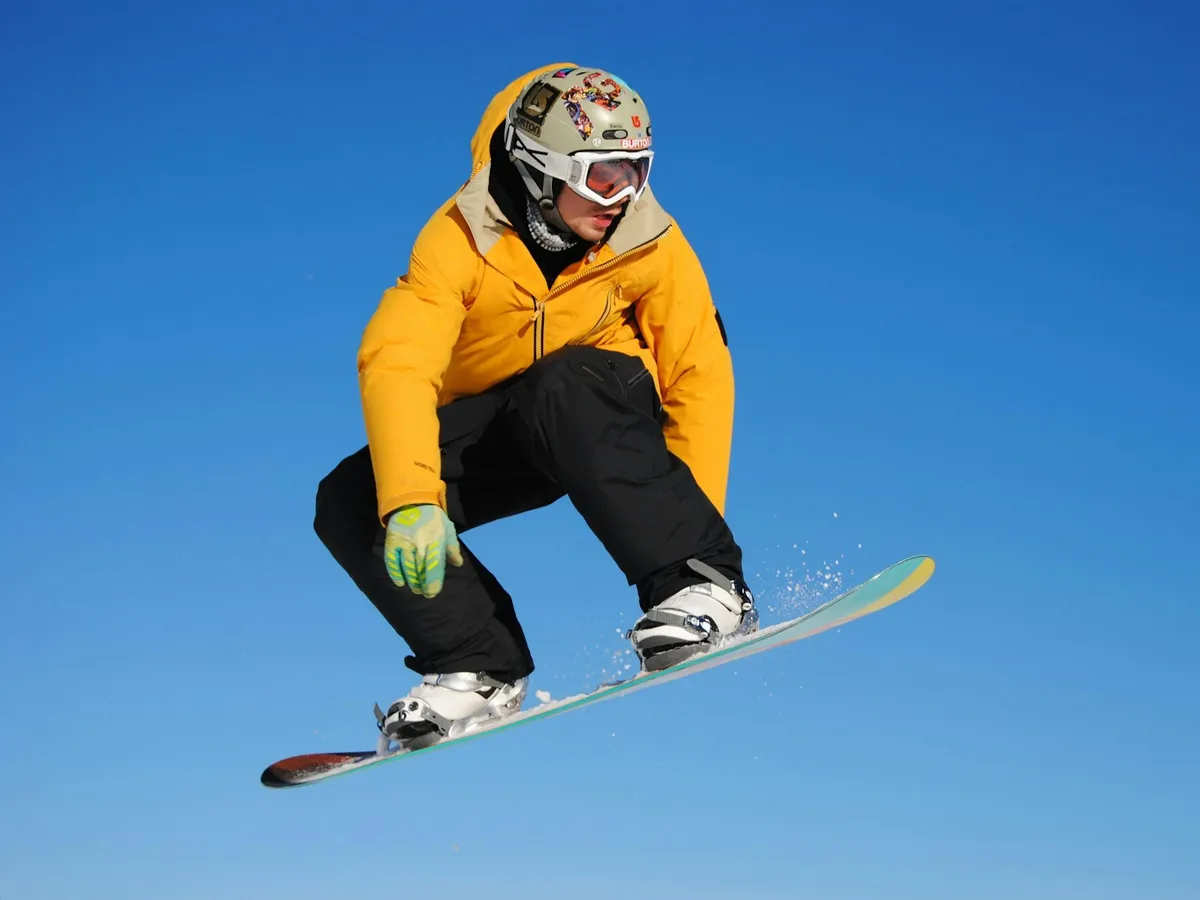
Reach down to fasten a binding, sit in the snow, then stand and lift your arms. A jacket that fits through those movements is a better starting point than one that only looks right in the mirror. You’ll want comfortable overlap with your pants, room for layers, and weather protection suited to your riding.
The next choice is warmth: built-in insulation for convenience, or a shell with separate layers you can change. The six jackets below cover both approaches.
Start with warmth and fit
If you run cold on lifts, look at the insulated options first. If you regularly remove a midlayer during the day, a shell may suit you better. Use the snowboard clothing fit checks before deciding on a size.
The six snowboard jackets at a glance
| Jacket | Award | Type | Waterproofing | Snowboard features | US price |
|---|---|---|---|---|---|
| Burton ak Cyclic | Best Overall | Shell | GORE-TEX 2L, fully taped | Helmet hood, pit zips, powder skirt, jacket-to-pant | $484.95 |
| Burton Covert 2.0 | Best Value | Insulated, 80g synthetic | DRYRIDE 2L, 10K | Drop tail, helmet hood, waist gaiter | ~$270 |
| Dope Snow Adept | Insulated Resort Pick Under $250 | Insulated, 60/40 gsm | DRY Tech, 15K, fully taped | Full zip, helmet hood, underarm vents, snow skirt | $229 regular price |
| Volcom L Insulated GORE-TEX | Best Insulated | Insulated, synthetic | GORE-TEX 2L, fully taped | Powder skirt, jacket-to-pant zip | $420 MSRP |
| Patagonia PowSlayer | Best Premium Shell | Shell | GORE-TEX Pro 3L | Powder gasket, helmet hood | $799 MSRP |
| Norrona Lofoten GORE-TEX | Best Backcountry | Shell | GORE-TEX 3L, 28K | Zip-off powder skirt, drop tail | $599 MSRP |
Burton ak Cyclic GORE-TEX
Best Overall
The Burton [ak] Cyclic combines a two-layer GORE-TEX shell with a helmet-compatible StormForm hood, pit zips, and a removable powder skirt. Its jacket-to-pant snaps are useful if your lower garment has a compatible connection. At $484.95, it makes sense to compare the fit and pocket access closely with less expensive shells. There’s no built-in insulation, so allow room and budget for the layers underneath.
Strengths
- GORE-TEX 2L, fully taped seams
- Helmet hood, pit zips, powder skirt, jacket-to-pant
- Versatile shell, layer for any temperature
Tradeoffs
- No insulation, so you must layer
- Premium price
- Separate hanging lining rather than a bonded 3L backer
- Insulation
- None (shell)
- Waterproofing
- Fully taped (no published mm)
- Fit
- Hip length, helmet hood
- Material
- GORE-TEX 2L
- Price
- $484.95
Best as a one-jacket-does-most shell. Skip it if you want built-in warmth or the lightest touring layer.
Burton Covert 2.0
Best Value
The Covert 2.0 puts 80 grams of ThermacoreECO insulation inside a DRYRIDE two-layer jacket. A longer back hem, helmet-compatible hood, and removable waist gaiter are useful details when you sit or bend. Its fixed warmth is convenient for cold resort days, but you can’t remove the fill when you get hot. This version is worth considering only if you find it available in a size that fits.
Strengths
- Warm 80g synthetic insulation at a low price
- Drop tail, helmet hood, waist gaiter
- Connects to Burton pants
Tradeoffs
- Lower stated waterproof rating than some options here
- Fixed insulation, less versatile than a shell
- Fixed insulation may feel too warm during hard activity
- Insulation
- 80 g ThermacoreECO synthetic
- Waterproofing
- 10K
- Fit
- Drop tail, helmet hood
- Material
- DRYRIDE 2L
- Price
- ~$270
Best for new or budget-minded riders who want built-in warmth. Skip it if you ride a lot of wet storms or prefer to layer.
This Covert 2.0 version was sold out at the last availability check.
Dope Snow Adept
Insulated Resort Pick Under $250
The Adept is an insulated full-zip jacket at $229. It has fully taped seams, a 15,000 mm waterproof rating, and Fellex insulation at 60 gsm through the body and 40 gsm in the sleeves and hood. Underarm vents let you release heat, while a helmet-compatible hood, wrist gaiters, and snow skirt help you adjust coverage. It’s a useful option to try if you want the warmth built in rather than buying a separate midlayer.
The tradeoff is that the fill stays in place. If you often get hot while riding or want to use the same outer layer over very different insulation, compare a shell before settling on the Adept.
Strengths
- Fully taped seams and published 15K waterproofing
- Built-in insulation, full zip, and underarm vents
- Helmet-compatible hood, snow skirt, and wrist gaiters
Tradeoffs
- Fixed insulation cannot be removed on warmer days
- Uses a different membrane from the GORE-TEX options
- Less layering flexibility than an uninsulated shell
- Insulation
- Fellex, 60 gsm body / 40 gsm sleeves and hood
- Waterproofing
- 15,000 mm DRY Tech, fully taped seams
- Features
- Full zip, helmet-compatible hood, underarm vents, snow skirt
- Price
- $229 regular US price
Best suited to resort riders who want an insulated full-zip jacket under $250. Choose a shell instead if adjusting warmth entirely through separate layers matters more.
Volcom L Insulated GORE-TEX
Best Insulated
The Volcom L Insulated GORE-TEX combines a fully taped two-layer outer with synthetic fill: 80 grams in the body and 60 in the sleeves. The powder skirt and Zip Tech connection are worth checking with your pants if you want the pieces to fasten together. At $420, compare its fit and features with the less expensive insulated jackets here. You’ll keep the built-in warmth even when the day turns mild.
Strengths
- Synthetic warmth plus fully taped GORE-TEX
- Powder skirt and jacket-to-pant connection
- Synthetic fill retains some insulation when damp
Tradeoffs
- Fixed insulation, less versatile than a shell
- Heavier than a shell or a light insulator
- Pricier than basic insulated jackets
- Insulation
- Synthetic, 80 g body / 60 g sleeves
- Waterproofing
- Fully taped (no published mm)
- Fit
- Powder skirt, jacket-to-pant zip
- Material
- GORE-TEX 2L
- Price
- $420 MSRP
Best for cold, wet resort days when you want warmth and waterproofing in one. Skip it if you run hot or prefer to layer a shell.
Patagonia PowSlayer
Best Premium Shell
The PowSlayer is the three-layer GORE-TEX Pro shell in this group, priced around $799. Its helmet-compatible hood, powder gasket, and pit zips are useful features to inspect if you’re shopping for a separate weather layer. You’ll supply all the warmth underneath. Before stretching the budget, try it with those layers and decide whether its cut and construction give you something the other shells don’t.
Strengths
- Top-tier 3-layer GORE-TEX Pro, PFAS-free
- Pit zips for adjustable ventilation
- Powder gasket and helmet hood
Tradeoffs
- The most expensive jacket here
- No insulation; layering required
- More shell than a casual resort rider needs
- Insulation
- None (shell)
- Waterproofing
- GORE-TEX Pro (top tier)
- Fit
- Helmet hood, powder gasket
- Material
- 3-layer GORE-TEX Pro (ePE, PFAS-free)
- Price
- $799 MSRP
Best for riders who want the three-layer shell and will layer. Skip it if the price is out of range or you want built-in warmth.
Norrona Lofoten GORE-TEX
Best Backcountry
The Lofoten GORE-TEX pairs three-layer fabric with an articulated freeride cut, a longer back hem, and a removable powder skirt. At $599, it’s another shell to compare if you want to change your insulation separately. Try reaching toward your boots with the jacket zipped, and check it with any backpack you ride in. A freeride label doesn’t tell you how it will fit your own shoulders and torso.
Strengths
- 28K GORE-TEX 3L with ePE membrane
- Articulated freeride fit, drop tail
- Zip-off powder skirt for flexibility
Tradeoffs
- Premium price
- No insulation; a layering shell
- More technical than a casual resort rider needs
- Insulation
- None (shell)
- Waterproofing
- 28K
- Fit
- Articulated freeride, drop tail
- Material
- GORE-TEX 3L, PFAS-free ePE
- Price
- $599 MSRP
Best for backcountry and big-mountain riders who want GORE-TEX 3L and a freeride fit. Skip it if you ride mostly mellow resort laps.
How to choose a snowboard jacket
Fit and the snowboard cut
Sit, crouch, and reach for your boots during the fitting. Check that the jacket still overlaps your pants and doesn’t pull across your shoulders. A longer hem may help with coverage, but the whole cut needs to work when you’re moving.
Insulated versus shell
An insulated jacket is convenient when you like built-in warmth. A shell lets you change the insulation underneath as activity and weather change. Check the amount and type of fill separately from the outer fabric; sitting in snow alone doesn’t determine which insulation you should buy.
Waterproofing
Waterproof ratings describe fabric tests. Compare them only with attention to the test method, and look at seam construction too. A larger figure doesn’t guarantee a particular number of dry hours on the mountain.
Features that matter
Try the features rather than counting them. Open the vents while wearing your gloves, turn your head with the hood over your helmet, and reach into pockets with any backpack fastened. Check the powder skirt and jacket-to-pant connection with the lower garment you own. A feature that is awkward to operate may add less value than a simpler design that fits well.
Bring your snowboard pants to the fitting so you can check waist overlap. Try goggles with your helmet and hood together; they should stay comfortably positioned as you turn your head.
Frequently asked questions
What makes a snowboard jacket different from a ski jacket?
There is substantial overlap. Some snowboard jackets have a longer or roomier cut, but features and fit vary by model. Try sitting and reaching toward your boots, and check the hood with your helmet. The sport label matters less than how the jacket fits and functions on you.
Should a snowboard jacket be insulated or a shell?
It depends how you ride and layer. An insulated jacket is simpler and warmer out of the box, good for cold resort days and people who run cold. A shell has no built-in insulation, so you control warmth with layers underneath, which is more versatile and better for high-output riding and the backcountry. Many riders prefer a shell plus a swappable mid-layer because it adapts to more conditions.
What do the waterproofing numbers like 10K and 20K mean?
They describe resistance to water pressure in a fabric test, expressed in millimeters. A 20K figure means 20,000 mm. Compare the test method where available, and check seams, closures, and the rest of the jacket rather than treating the number as a guarantee in specific weather.
Why do snowboarders favor synthetic insulation over down?
Synthetic fill generally retains more insulating ability when damp and dries faster than down. That can be useful when moisture is hard to avoid. The jacket’s outer protection and your activity matter too; choose the whole garment rather than assuming all snowboarders need the same fill.
What is a powder skirt and do I need one?
A powder skirt is an elasticized inner gasket near the hem that cinches around your waist to keep snow from blowing up into the jacket during deep days or after a fall. Many snowboard jackets include one, and many connect to matching pants or bibs so the whole system seals together. If you ride deep snow or fall a lot (everyone does while learning), it is useful; for hardpack resort laps it matters less.
Choose for your riding conditions
Start by choosing built-in warmth or a shell. The Cyclic, PowSlayer, and Lofoten let you adjust insulation separately; the Covert, Adept, and Volcom L keep it inside the jacket. That difference will affect your day more than the order of the list.
Try the shortlist with your snowboard pants and helmet. Check the overlap, hood movement, and access to vents before spending more on a fabric name.