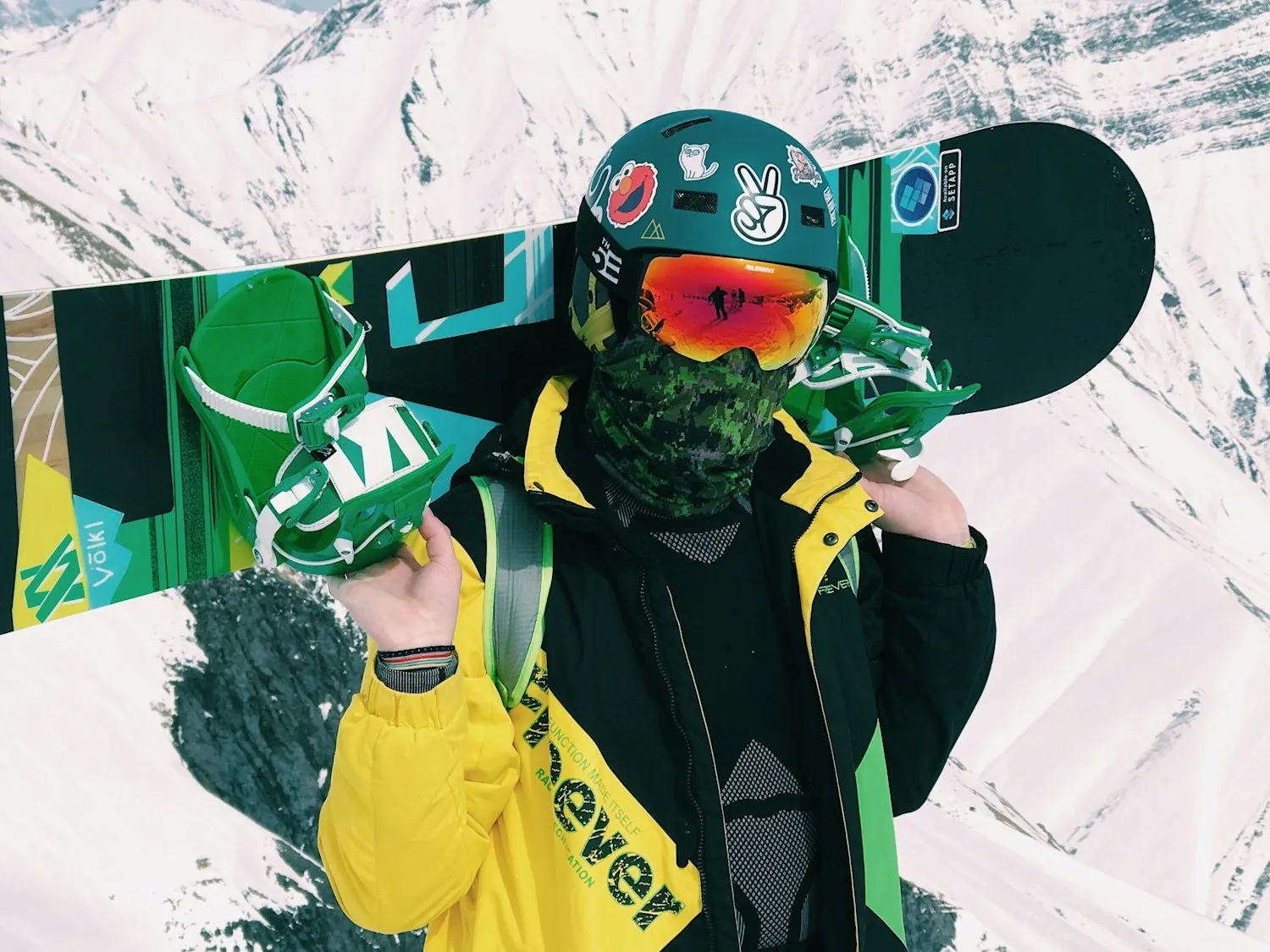
Snowboard goggles are, optically, the same goggles skiers wear. The lenses, the coatings, the anti-fog systems all cross over, and most goggles are sold for both sports. What is different is cultural and physical: snowboarders lean toward the flatter cylindrical lens look, Anon (Burton’s snowboard-rooted eyewear brand) is one of the most visible goggle lines in the sport, and helmet fit matters at two points, where the goggle meets the helmet brim and where the strap sits across the back. This guide honors those differences without pretending snowboard goggles are a separate optics category, because they are not.
What decides a good goggle is fit, lens tint for your light, and how easily you can swap lenses when the weather turns. The six picks below sort by the job you need a goggle to do, with verified lens systems and prices, and a note on which are spherical and which are cylindrical so you can buy the look you want.
How these goggles were chosen
Selection looked at lens quality, swap system, helmet fit, and value, across the brands snowboarders buy. Each pick is a current model, and specs, lens tints, VLT figures, and US prices were checked against each brand’s product page and major retailers in June 2026. Anon is well represented here because it is Burton’s snowboard-rooted eyewear brand and one of the most visible goggle lines in snowboarding, not for any other reason. VLT changes with every lens tint, so figures here are paired with the named lens; where a manufacturer did not publish an exact VLT, the lens is described by its purpose instead of an invented number.
This guide is spec-based, not field-tested. Recommendations come from published optics, lens systems, and fit, matched to a use case.
The six snowboard goggles at a glance
| Goggle | Award | Lens shape | Swap system | Included lens | US price |
|---|---|---|---|---|---|
| Anon M4 | Best Overall | Toric or cylindrical | Magna-Tech magnetic + MFI | Sunny Onyx 6% + bonus Variable Violet 34% | ~$340 |
| Anon Helix 2.0 | Best Value | Cylindrical | Notch-and-tab | Variable Blue 21% + bonus Amber 55% | ~$120 |
| Dragon X2S | Best Spherical Lens | Spherical | Swiftlock | Lumalens base + bonus lens | ~$220 |
| Oakley Line Miner L | Best Cylindrical Look | Cylindrical | Manual swap | Single Prizm Snow lens | ~$176 |
| Smith I/O MAG | Best Magnetic System | Spherical | MAG magnetic, two lenses | Sun + bonus storm lens | ~$283 |
| Anon Sync | Best Low-Light Lens | Cylindrical | M-Fusion magnetic + MFI | Cloudy Pink 53% + bonus Variable Blue 21% | ~$210 |
Prices and lens tints verified June 2026. VLT percentages belong to the named tints; other colorways carry different numbers.
Anon M4
Best Overall
The M4 is the goggle most snowboarders aspire to, and it earns the overall pick by combining the best magnetic swap, two quality lenses, and the MFI facemask system in one package. It uses Anon’s Magna-Tech magnetic lens change, which snaps lenses in and out in seconds and holds them with magnets strong enough to survive a fall, and it ships with a dark Sunny Onyx lens (6% VLT) for bright days plus a bonus Variable Violet lens (34%) for mixed light. It also integrates magnetically with Anon’s MFI facemask, which clips to the goggle to seal out drafts. It comes in toric and cylindrical lens shapes at the same price, so you can pick the look. At $339.95 MSRP, often discounted, it is an investment, but it is the goggle here with the fewest compromises.
Strengths
- Best-in-class Magna-Tech magnetic lens swap
- Two quality PERCEIVE lenses plus an MFI facemask in the box
- Toric or cylindrical, your choice of look
Tradeoffs
- The most expensive pick here
- Magnetic system adds cost you may not need
- Big-fit frame is large for smaller faces (see the M4S)
- Lens shape
- Toric or cylindrical
- VLT
- Sunny Onyx 6% + Variable Violet 34%
- Frame fit
- Large (M4S for smaller faces)
- Lens swap
- Magna-Tech magnetic
- Price
- ~$340 MSRP
Best for the rider who wants one goggle that does everything. Skip it if the budget is tight or you never swap lenses.
Anon Helix 2.0
Best Value
The Helix 2.0 is how you get Anon optics and a two-lens kit without the flagship price. It is a cylindrical-lens goggle with a simple notch-and-tab lens change (no magnets, no facemask), it is OTG-compatible for glasses wearers, and it still ships with two PERCEIVE lenses: a Variable Blue at 21% VLT for sun-to-mixed light and a bonus Amber at 55% for flat light and storms. That means you are covered across conditions out of the box for around $120, which is excellent value. You give up the fast magnetic swap and the facemask integration, but the lens quality and the two-lens coverage are the parts that matter most, and the Helix keeps both.
Strengths
- Anon PERCEIVE optics near $120
- Two lenses cover sun and storm out of the box
- Simple, reliable lens change
Tradeoffs
- Manual notch-and-tab swap, slower than magnetic
- No facemask integration
- Cylindrical-only, no spherical option
- Lens shape
- Cylindrical
- VLT
- Variable Blue 21% + Amber 55%
- Frame fit
- Helmet-compatible
- Lens swap
- Notch-and-tab
- Price
- ~$120
Best for the value-minded rider who still wants two good lenses. Skip it if you want fast magnetic swaps.
Dragon X2S
Best Spherical Lens
For the wide, low-distortion view of a spherical lens, the Dragon X2S is the pick, and Dragon’s snowboard roots make it a natural fit here. The spherical Lumalens curves in both directions for a broad field of view, and Dragon’s Swiftlock system swaps lenses quickly with a pair of levers rather than magnets. It is a frameless goggle in a medium, fairly universal fit, built helmet-compatible, and it ships with a base lens plus a bonus lens so you are covered as the light changes (the exact tints vary by package, so check which two ship on the version you buy). It is the current sibling of the older X2, which is now clearing out, and it sits below the premium spherical goggles while delivering the optics that define the category.
Strengths
- Wide, low-distortion spherical view
- Quick Swiftlock lens change
- Two Lumalens lenses, helmet-compatible
Tradeoffs
- Lever swap is not as instant as magnetic
- Spherical look is less snowboard-traditional than cylindrical
- Mid-pack price
- Lens shape
- Spherical (Lumalens)
- VLT
- Base + bonus lens (tints vary)
- Frame fit
- Medium / universal
- Lens swap
- Swiftlock levers
- Price
- ~$220
Best for riders who want spherical optics without the flagship price. Skip it if you prefer the flat cylindrical look.
Oakley Line Miner L
Best Cylindrical Look
The Line Miner is the goggle that defined the modern flat, cylindrical snowboard look, with a low-profile, close-to-face cylindrical frame and a wide lens that sits flat across the face for strong peripheral vision. It uses Oakley’s Prizm Snow lens technology, which tunes contrast for snow conditions, and the large (L) frame fits most adult faces and pairs cleanly with a helmet. It swaps lenses manually rather than magnetically and ships with a single lens, so plan to buy a second Prizm tint if you ski a wide range of light. But for the rider who is buying the cylindrical aesthetic and Oakley’s optics at a fair price (around $176 MSRP, often discounted to about $140), it is the look-defining pick.
Strengths
- The benchmark flat cylindrical snowboard look
- Prizm contrast optics, wide field of view
- Helmet-compatible at a fair price
Tradeoffs
- Ships with one lens; a second is extra
- Manual swap, not magnetic
- Large frame may be big for smaller faces
- Lens shape
- Cylindrical, low-profile
- VLT
- Single Prizm Snow lens (varies by tint, e.g. Black Iridium 6%, Torch Iridium 17%)
- Frame fit
- Large (L)
- Lens swap
- Manual
- Price
- ~$176 MSRP
Best for riders who want the classic cylindrical look. Skip it if you want a two-lens kit or fast swaps.
Smith I/O MAG
Best Magnetic System
Smith’s MAG is widely considered the slickest magnetic lens system going, and the I/O MAG is the goggle built around it. Magnets pull the lens into place and locking levers hold it, so a lens change takes seconds and the lens will not pop out in a tumble. The spherical lens carries Smith’s ChromaPop contrast optics, and it ships with two lenses, a darker sun tint and a bright low-light tint, covering the full range of conditions. At around $283 it is a premium goggle, but if the magnetic swap is the feature you care about most, this is the system to beat. The standard I/O MAG is a medium fit, with a Low Bridge Fit version for lower nose bridges; for larger faces, Smith’s I/O MAG XL is the bigger-frame option.
Strengths
- Excellent MAG magnetic swap with locking levers
- ChromaPop spherical optics
- Two lenses included for sun and storm
Tradeoffs
- Premium price
- Larger faces need the separate I/O MAG XL
- Exact lens VLT varies by colorway, so check before buying
- Lens shape
- Spherical
- VLT
- ChromaPop sun + storm lenses
- Frame fit
- Medium (Low Bridge Fit available)
- Lens swap
- MAG magnetic, locking levers
- Price
- ~$283
Best for riders who swap lenses often and want the best system for it. Skip it if you rarely change lenses.
Anon Sync
Best Low-Light Lens
Storms, fog, and flat light are where most goggles struggle, and the Sync ships ready for them. Its primary lens is a PERCEIVE Cloudy Pink at 53% VLT, a bright, high-contrast flat-light tint, with a bonus Variable Blue lens (21%) for when the sun comes out. It uses Anon’s M-Fusion magnetic latch and integrates with the MFI facemask, so it swaps quickly and seals well. Most goggles treat the bright lens as the afterthought bonus; the Sync makes it the main event, which is why it takes the low-light award. At around $210 it is a mid-priced way into a storm-ready setup. This award applies to the Cloudy Pink 53% and Variable Blue 21% (Deep Cherry) package; other Sync colorways ship different lens combinations, so confirm the lens package on the colorway you are buying.
Strengths
- Bright Cloudy Pink primary lens, built for flat light
- Magnetic latch and MFI facemask integration
- Includes a darker bonus lens for sun
Tradeoffs
- The bright main lens is too bright for hard sun on its own
- Cylindrical-only
- Mid-pack price
- Lens shape
- Cylindrical
- VLT
- Cloudy Pink 53% + Variable Blue 21%
- Frame fit
- Helmet-compatible, MFI facemask
- Lens swap
- M-Fusion magnetic
- Price
- ~$210
Best for riders who chase storm days and flat light. Skip it if you mostly ride bright, sunny resorts.
How to choose: lenses and fit
Lens tint and VLT
The most important lens decision is matching the tint to the light. VLT (visible light transmission) is the percentage of light a lens passes: low VLT (about 5 to 20 percent) is a dark lens for bright, sunny days, and high VLT (40 percent and up) is a bright lens for storms, snow, and flat light. Mid-range tints around 20 to 35 percent are the variable-condition all-rounders. If you only own one lens, a mid-range tint is the safest pick; a two-lens setup, which several goggles here include, lets you cover both ends of the light.
Spherical versus cylindrical
The two lens shapes are mostly about look and budget. A spherical lens curves both horizontally and vertically, which slightly reduces distortion and widens the view, usually at a higher price. A cylindrical lens is flat top-to-bottom, costs less, and gives the low-profile look many snowboarders prefer. On modern goggles the optical difference is small, so buy the shape you like and can afford rather than agonizing over it.
Lens-swap systems
How a goggle changes lenses decides how often you will do it. Magnetic systems like Anon’s Magna-Tech and Smith’s MAG snap lenses in and out in seconds, which matters with cold hands, and use clips or levers so the lens stays put in a fall. Manual systems cost less and hold securely once seated but are slower. If you change lenses with the weather, pay for magnetic; if you set one lens and leave it, you do not need to.
Helmet fit and fog
Try your goggle with your helmet before relying on the pairing. You want the goggle frame to meet the helmet brim with no gap of bare forehead, and the strap to sit flat across the back. For fog, the keys are airflow and not trapping moisture: look for good venting and an anti-fog lens coating, do not wipe the inside of the lens (it strips the coating), and avoid pulling a neck gaiter up over the bottom vents, which is the most common cause of a fogged goggle.
Building out the rest of the kit? Best snowboard jackets, 2026 covers the shells that vent well over goggles. Best snowboard pants, 2026 handles the fit-over-boots problem. Best snowboard boots, 2026 closes out the head-to-toe setup.
Frequently asked questions
Are snowboard goggles different from ski goggles?
Optically, no. The lenses, coatings, and anti-fog technology are the same, and most goggles are sold for both sports. The differences are cultural and fit-related: snowboarders tend to favor the flatter cylindrical lens look, certain brands (especially Anon, owned by Burton) are snowboard-rooted, and helmet compatibility matters at two points, where the goggle meets the helmet brim and where the strap sits across the back. Buy whichever goggle fits your face and helmet; the sport on the box does not change the optics.
What does VLT mean, and which lens do I need?
VLT is visible light transmission, the percentage of light a lens lets through. Low VLT, around 5 to 20 percent, is a dark lens for bright, sunny days. High VLT, 40 percent and up, is a bright lens for storms, snow, and flat light. Mid-range tints around 20 to 35 percent are all-rounders. Many goggles include two lenses so you can swap; if you only get one, a mid-range tint is the safest single choice.
What is the difference between spherical and cylindrical lenses?
A spherical lens curves both horizontally and vertically, like a section of a globe, which tends to reduce distortion and glare and gives a slightly wider field of view, usually at a higher price. A cylindrical lens curves only horizontally and is flat top-to-bottom, which costs less and gives the flatter profile many snowboarders prefer aesthetically. Optically the gap is small on modern goggles; it is mostly about look and budget.
Are magnetic lens-swap systems worth it?
If you change lenses with the weather, yes. Magnetic systems like Anon’s Magna-Tech and Smith’s MAG swap in seconds with cold hands, usually with a clip or latch to hold the lens firmly, though no lens system is crash-proof. Non-magnetic systems cost less and hold securely once seated but are slower to change. If you set one lens and forget it, you do not need to pay for magnetic.
Will any goggle fit my snowboard helmet?
Most modern goggles and helmets pair well, but it is worth checking. You want the top of the goggle frame to meet the helmet brim with no gap of exposed forehead, and the strap to sit flat across the back of the helmet. Try them together before you rely on the combination, since fit varies by face shape, goggle frame size, and helmet model. Many brands tune their goggles and helmets to work as a system.
The short version
For one goggle that does everything, the Anon M4 is the all-rounder, with the best magnetic swap and two lenses plus a facemask in the box. For the same two-lens coverage at a fraction of the price, the Anon Helix 2.0 near $120 is the value pick.
From there, match it to your preference and your light: the Dragon X2S for spherical optics, the Oakley Line Miner L for the classic cylindrical look, the Smith I/O MAG for the best magnetic system, and the Anon Sync for storm and flat-light days. Try any goggle with your helmet before you commit. New to the sport? Start with how to learn snowboarding, and the rest of the Snowboard Gear section covers the kit that goes with it.
Lens tints, VLT figures, and prices in this guide were verified against current brand information and major US retailers in June 2026. Lineups and prices change; confirm the current lens and VLT on the brand’s product page before buying. If you find an error in this guide, please email corrections@slopehound.com.