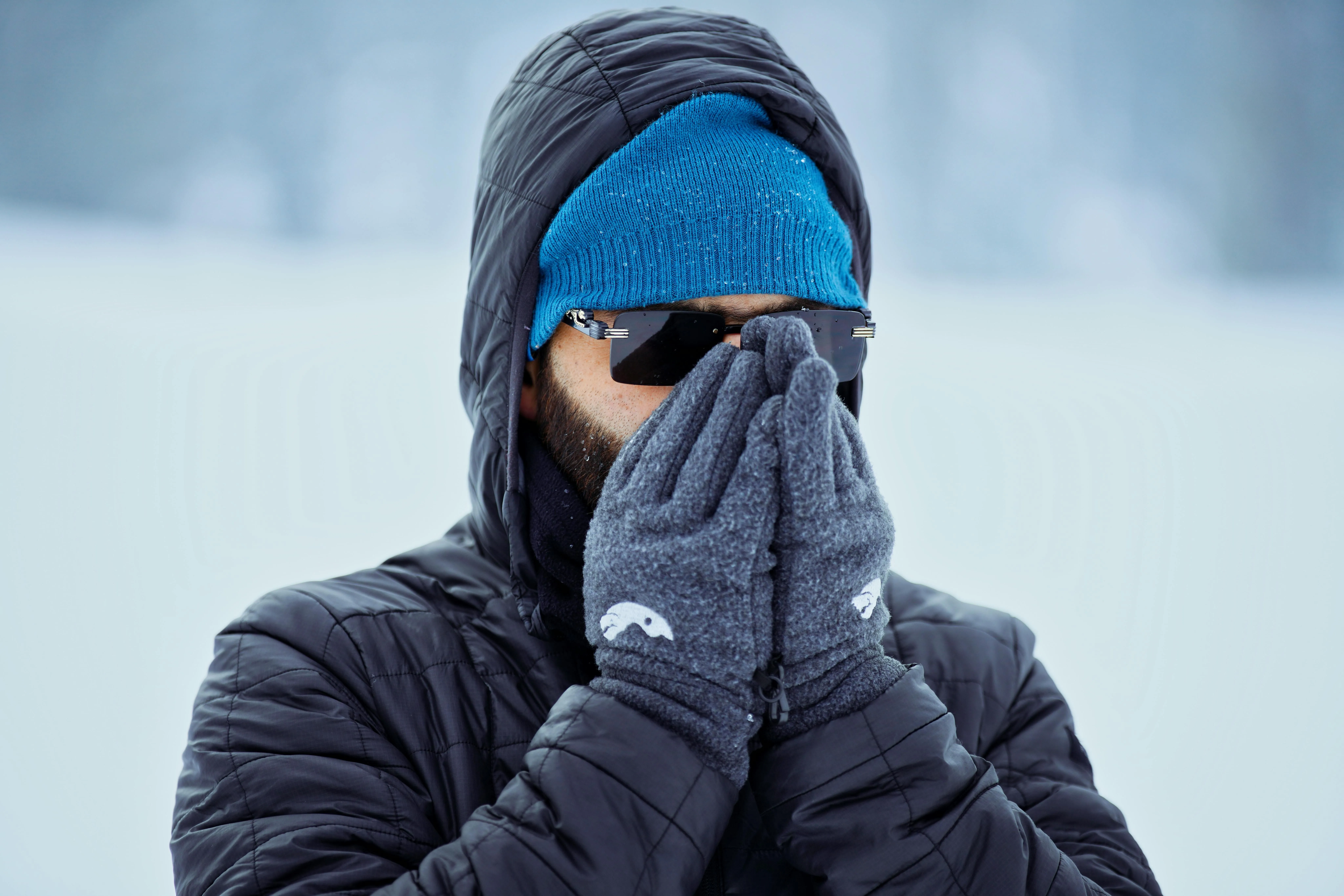
Being cold on the mountain is almost always a layering problem, not a “buy a warmer jacket” problem. It is the person in the $800 shell shivering at the bottom of the run because they wore a cotton hoodie under it. It is the guy who piled three fleeces on at the car, sweated through every one of them on the first bootpack, and spent the rest of the day frozen solid. Cold, when it gets you, is usually the result of one specific mistake, and it is almost never the jacket’s fault.
Here is the good news: once you understand what layering is doing, the same three or four pieces can carry you across almost any winter day. You do not need a closet full of gear. You need the right stuff in the right order, and the sense to add and drop it as you heat up and cool down. This is how to build that, how it changes between skiing and snowboarding, and where your money matters.
The system, in one breath
Three layers, three jobs. The base moves sweat off your skin. The mid traps your body heat. The shell keeps the wind and weather out. Almost every way people get cold is a failure at one of those three jobs.
The base layer
The stuff against your skin. Its whole job is to move sweat off you so it does not sit there and freeze. Ski shops will happily sell you a $120 merino crew. You do not have to spend that. What you have to do is not wear cotton.
Two things work. Merino wool, from Smartwool or Icebreaker or a dozen others, insulates even when it is damp and does not stink after three days in the same base layer. Synthetics, polyester and its relatives, dry faster and cost less. Both move sweat. Merino feels nicer on skin and forgives you on a multi-day trip; synthetic dries overnight on a hook in the lodge and costs a third as much. Arc’teryx describes the base layer’s job plainly, as moving moisture away from your skin, and Norrøna adds the fit rule that matters: it has to sit snug against you, not baggy, or it cannot pull the sweat off in the first place. Go lighter for warm days or hard laps, heavier for deep cold or standing around. The same logic runs below the waist, which is its own thing covered in what to wear under ski pants.
Watch out for: cotton. A cotton tee, a cotton hoodie, cotton long johns under your pants. All of it soaks up sweat, holds it against your skin, and pulls heat out of you faster than your body can make it. “Cotton kills” is one of the oldest lines in cold-weather advice, and as the National Park Service puts it flatly, cotton will not keep you warm once it is wet. It is not being dramatic.
The mid layer
The warm one. It works by trapping air, and you have three real choices. Fleece breathes well and dries fast but stops nothing on its own, so it is the move on cold days when you are working hard and want the heat to leak out instead of cook you. A synthetic puffy holds most of its warmth even when damp and gives you more heat per ounce than fleece, which makes it the do-everything pick. Down is the warmest thing you can carry for the weight and stuffs down to almost nothing, but it quits the moment it gets wet. Arc’teryx and Norrøna both land in the same place: down wins on warmth for weight and loses when soaked, synthetic is the heavier fabric that keeps working damp.
How to pick, on a given day: if you are earning your turns and sweating, wear the fleece or a thin synthetic you can unzip. If you are lapping a chair and standing around at the top, or it is flat brutal out, wear the down or a fat synthetic you can pull on and off.
Watch out for: wearing your warmest mid layer to work hard in. Boot up a ridge in your down puffy and you will sweat it out, and a wet puffy is a cold puffy. Save the down for when you stop moving.
The shell
The outer layer, the one taking the wind and the snow. Two kinds, and the difference is real. A hardshell is fully waterproof: a waterproof, breathable membrane behind a tough face fabric, keeping weather out while your sweat vapor still gets to escape. GORE-TEX is the name everyone knows. A softshell gives up full waterproofing for stretch and breathability, so it shrugs off wind and a little snow while moving far more air, which is exactly what you want when you are working hard in cold, dry weather. When the cold turns into the kind that hurts, the outer layer becomes a real insulated parka, a different animal covered in best winter coats for extreme cold.
The waterproof number on the tag means something specific. They measure it by pushing water against the fabric until it leaks through, the hydrostatic head test behind textile standards like ISO 811, and report it in millimeters: the height of the water column the fabric holds back. As a rough guide, and this is a retailer convention and not a law of nature, about 10,000mm handles most everyday snow and dry cold, about 20,000mm is what you want for the wet snow of the Cascades or a spring slushfest, and past 20,000mm is storm-day and expedition territory. Breathability is a second number, in grams per square meter over 24 hours, where higher means more sweat escapes; retailer Snow and Rock suggests both numbers land somewhere in the 10,000 to 20,000 range for snow sports.
Watch out for: buying the shell too small. It has to close over a fleece and a puffy, not just over the flannel you wore into the shop. Try it on the way you will wear it, layered up, or you become the person who cannot zip the jacket over a mid layer on the coldest morning of the year.
Skiing and snowboarding heat differently
Same three layers, different heat curve, and it changes what you reach for. Skiers work more or less the whole way down, making heat every turn, then cool off sitting on the ride up. Snowboarders spend more of the day dropped in the snow to strap in, skating the flats, and standing at the top waiting on the group, so they cool off in short repeated hits. Neither is the right way; they are just different patterns to dress for. A skier can run a touch lighter on insulation and lean harder on wicking, since they are rarely still for long. A snowboarder does better with a slightly warmer mid layer, or a packable puffy to throw on for the sit-downs and the summit waits. Ride both and you feel it. Adjust the mid layer first.
The mistakes that make you cold
It is a short list, and it is almost always one of these. Cotton, still, anywhere in the stack. Overdressing at the car, then sweating out your base on the first climb and paying for it all afternoon, when the fix is to start a little cold and let the work warm you. A shell that will not close over your layers. And the cheapest shell on the wall, which wets out or peels apart by the end of your first real season and ends up costing more than buying once. Put your money where the warmth is before you spend it against your skin.
Dressing well without going broke
None of this needs a premium price tag; the physics does not check your receipt. To cover two layers in one buy, a 3-in-1 like Columbia’s Whirlibird V Interchange, listed around $230 and routinely on sale, zips an insulated liner into a shell. For a base layer, a synthetic off a big-box rack costs a fraction of specialist merino from Smartwool or Icebreaker, and it works fine; the merino is a comfort and smell upgrade, not a warmth requirement. For the mid, a plain fleece is the cheapest warm thing going, while a synthetic puffy like the Arc’teryx Atom, around $280, sits at the nice end of the same idea. Spend on the mid and the shell, where the warmth and the weatherproofing live, before you spend on the layer against your skin.
The physics, if you want it
Insulation does not make heat. It slows down the heat you are already making, by trapping still air, and that is the whole game. Water ruins it, because it moves heat about 25 times faster than air, roughly 0.6 against 0.023 watts per meter-kelvin, so the second your insulation gets wet, from weather or from your own sweat, it stops insulating. That is why moving sweat matters as much as trapping air: US Army work compiled by the National Academies found that hard exercise in cold-weather kit can pour out close to two liters of sweat an hour, plenty to soak the whole system if it has nowhere to go. The military built a seven-level system around exactly this, the ECWCS Generation III, meant to cover everything from around 40°F down to about -50°F. Same idea you are running on the hill. Just more layers.