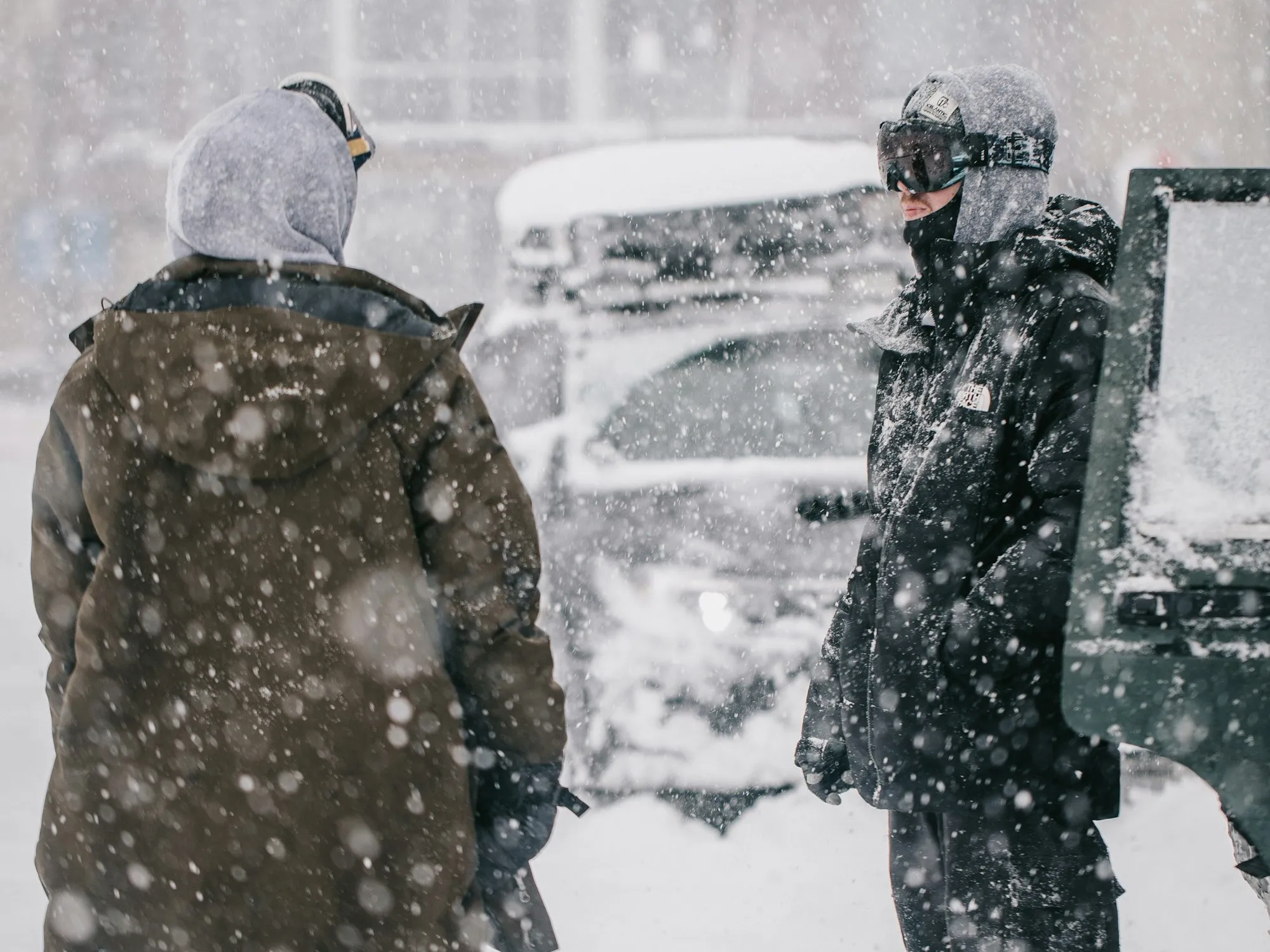
At -20°F and below, exposed skin can freeze fast, and the coat that handled a frosty morning commute is not the one that keeps you safe. Extreme cold is a different problem than ordinary winter, and the gap between the two is wider than most marketing suggests. Below roughly -10°F, small failures start to matter: a zipper with no storm flap behind it, a hood that won’t cinch, a hem that stops at the waist and lets warm air escape every time you move. At -20°F and colder, those gaps stop being discomforts and start being the reason you head indoors early.
What separates a true extreme-cold coat from a merely warm one is mostly insulation quantity, coverage, and wind sealing. A serious cold-weather parka carries a lot of insulation (a real winter down parka holds somewhere around 150 to 300 grams of down), extends past the hips, seals at the wrists and neck, and blocks wind across its whole surface. When a coat is undermatched to the temperature, the give-aways are predictable: you feel cold at the lower back, the wind finds the front zipper, and your core temperature drifts down over the half hour you’re outside rather than holding steady.
This guide covers coats and parkas for subzero winter, from true expedition-level cold around -20°F and below to more practical city and value parkas that work in severe winter when layered properly. The specifications are verified against each brand’s current information, and the aim is to match a coat to how you’ll use it: walking a city in deep winter, standing still outdoors for long stretches, or wanting one parka warm enough that the temperature stops being a factor at all. One pick, the Patagonia, is a technical layering parka rather than a standalone coat, and it is flagged as such.
How these coats were chosen
Selection started with coats designed for genuine sub-zero use rather than fashion-first puffers that borrow the look. Each pick had to be a current, in-production model with insulation, coverage, and wind sealing appropriate to extreme cold. Specs, fill power, insulation type, and US prices were checked against each brand’s current product page and major retailers in June 2026. Prices move, especially across sale seasons, so treat every figure here as a snapshot rather than a fixed number.
The awards below are about fit-to-purpose, not a ranking from best to worst. The best coat for standing on a frozen lake for three hours is not the best coat for walking a windy downtown, and neither is the one to grab if your priority is warmth with the least possible weight and bulk. Coats are flagged for who they suit and, where it matters, who should skip them.
- What “extreme cold” means for a coat
- The six coats at a glance
- Why a true extreme-cold coat matters
- Canada Goose Expedition Parka
- L.L.Bean Mountain Classic Down Parka
- The North Face McMurdo Parka
- Eddie Bauer Superior Down Parka
- Patagonia Durable Down Parka
- Fjällräven Nuuk Parka
- How to choose: the buyer’s guide
- RDS, PFAS, and repair
- Frequently asked questions
What “extreme cold” means for a coat
There’s no single industry definition of extreme cold, but for clothing the practical threshold is around -20°F (-29°C) and below, where exposed skin can begin to freeze quickly and a coat’s margin for error shrinks. Two coats can both be called “winter parkas” and behave completely differently at that temperature.
The variable that matters most is how much insulation the coat holds and how completely it surrounds you. Insulation works by trapping a layer of still air against your body, and warmth comes from the volume of that trapped air. That’s why a long parka with a generous fill of down outperforms a slim, fashionable puffer of the same fill power. It simply holds more air, over more of you.
The second variable is wind. Moving air strips away the warm layer your body builds up, which is why a coat that feels warm standing in a heated entryway can feel thin the moment you step into a -20°F wind. A tightly woven, wind-resistant shell is doing as much work in extreme cold as the insulation behind it. When a coat is undermatched, wind is usually what exposes it first, finding the zipper line, the hem, and the wrists.
The six coats at a glance
| Coat | Award | Insulation | Fill power | Length | US price |
|---|---|---|---|---|---|
| Canada Goose Expedition Parka | Best Overall | Down, RDS-certified | 625 | Thigh | ~$1,895 |
| L.L.Bean Mountain Classic Down Parka | Best Value | DownTek water-repellent down | 650 | Thigh (32.25 in) | ~$199 |
| The North Face McMurdo Parka | Best for City Cold | Recycled down, RDS-certified | 600 | Long | ~$400 |
| Eddie Bauer Superior Down Parka | Best for Stationary Outdoor Work | Premium down, waterproof shell | 650 | Thigh | ~$349 |
| Patagonia Durable Down Parka | Best Lightweight Layering Parka | Down, RDS-certified | 800 | Hip | ~$575 |
| Fjällräven Nuuk Parka | Best Long Parka | Synthetic (recycled polyester) | n/a | Long | ~$500 |
Prices verified June 2026 and rounded; sale pricing is common from late fall onward. Fill power applies to down coats only; the Fjällräven Nuuk uses synthetic insulation, which fill power does not measure.
Why a true extreme-cold coat matters
In serious cold your body loses heat faster than it makes it. An undermatched coat lets that happen slowly, which is the dangerous version: you do not notice until you are well behind. Matching the coat to the temperature is heat management, and the comfort is a side effect.
Public-health guidance lines up with what the gear does. The CDC’s cold-weather advice is to wear an outer layer that is tightly woven and preferably wind and water resistant to cut heat loss, over inner layers of wool, silk, or polypropylene, which hold body heat better than cotton. A good extreme-cold coat is the outer layer in that system: the windproof, insulated shell that everything underneath depends on. It is not a substitute for layering, and the picks below all assume you’re wearing something sensible beneath them.
That’s also why “warmest coat” is the wrong question to lead with. The right question is what you’ll be doing in it. Standing still generates almost no body heat, so stationary cold needs maximum insulation. Walking briskly generates a lot, so an over-insulated coat will leave you sweating, and damp clothing in the cold is a real hazard. The awards below sort the coats by that logic.
Canada Goose Expedition Parka
Best Overall
The Expedition Parka is the coat Canada Goose built for researchers working in Antarctica, and it remains the company’s benchmark for extreme cold. It uses 625-fill-power down in a heavy fill weight, and Canada Goose rates it in TEI 5, the top of its Thermal Experience Index, for -22°F and below. It runs to mid-thigh with a cinching, down-filled hood (the current standard Expedition ships with no fur or faux-fur ruff) and a two-way zipper backed by a storm flap. In practice it is one of the few off-the-shelf coats built for sustained time in the coldest conditions a person is likely to face on this continent.
It is also $1,895, and the honest framing is that most people do not need this much coat. Where it earns its place is at the extreme end: prolonged stationary exposure in deep cold, or wanting a single parka that removes temperature from the equation and can be repaired rather than replaced over many winters. Canada Goose’s down has been certified to the Responsible Down Standard since 2021, and the brand’s repair and resale programs extend the life of a coat at this price.
Strengths
- Built for extreme, sustained cold
- Heavy fill weight and full coverage to mid-thigh
- RDS-certified down; repair and resale support
Tradeoffs
- Very expensive, and more coat than most people need
- Heavy and bulky compared with high-fill-power alternatives
- 625 fill power is moderate; the warmth comes from quantity, not loft
- Fill
- Down (625 fp)
- Warmth tier
- TEI 5 (-22°F and below)
- Hood
- Down-filled, no ruff
- Length
- Thigh
- Price
- ~$1,895
Best for anyone who is regularly outdoors and stationary in extreme cold and wants one coat to handle it for years. Skip it if your winters are merely cold rather than severe; the money buys more capability than you’ll use.
L.L.Bean Mountain Classic Down Parka
Best Value
The Mountain Classic is the value benchmark here, and it earns the spot by not cutting the corners that matter. It uses 650-fill-power DownTek down, a water-repellent treatment that helps the down keep its loft when damp, in a hooded, thigh-length parka (32.25 inches center back) at around $199. A $200 thigh-length down parka with water-repellent fill is strong value, and that fill power is higher than several coats costing twice as much, and L.L.Bean’s return policy covers defects in materials and workmanship, which takes some of the risk out of buying without trying it on.
It is not an expedition parka, and at the deep end of extreme cold you’ll want to layer well underneath. But for the much larger group of people facing cold winters rather than polar ones, it delivers most of the warmth of premium parkas for a fraction of the price.
Strengths
- 650-fill down at an entry-level price
- Water-repellent DownTek treatment
- Backed by L.L.Bean’s materials-and-workmanship guarantee
Tradeoffs
- Not as heavily insulated or wind-sealed as expedition-grade parkas
- Moderate fill weight; layer underneath for the coldest days
- Single colorway range compared with premium brands
- Fill
- DownTek down
- Fill power
- 650
- Treatment
- Water-repellent down
- Length
- Thigh (32.25 in CB)
- Price
- ~$199
Best for a first serious winter coat, or anyone who wants real down warmth without a premium price. Skip it only if you need maximum, stationary-cold warmth, where a heavier parka pulls ahead.
The North Face McMurdo Parka
Best for City Cold
The McMurdo has been The North Face’s cold-city parka for years, and the current version is the most environmentally considered it has been. It uses 600-fill-power recycled down certified to the Responsible Down Standard, a double-layer recycled nylon shell that’s seam-sealed, and a durable water repellent finish made without intentionally added PFAS. The removable faux-fur ruff, storm-flap zipper, and long city cut make it well suited to the stop-start rhythm of city winter: waiting for transit, walking between buildings, standing on a cold platform.
At around $400 it sits in the middle of this list, and the value is in the combination of warmth, weather resistance, and a shell built to take daily urban wear. It’s warm enough for hard cold without being so much coat that it’s awkward indoors or on a crowded train, which is exactly the balance city use needs.
Strengths
- Recycled, RDS-certified down and a recycled shell
- PFAS-free DWR finish
- Weather-resistant and built for daily city wear
Tradeoffs
- 600 fill power is the lowest here; warmth is good, not extreme
- Heavier than high-fill-power down for the same warmth
- Long cut is less convenient indoors and on transit
- Fill
- Recycled down
- Fill power
- 600
- Outer fabric
- DryVent 2L, non-PFC DWR
- Length
- Long
- Price
- ~$400
Best for daily winter life in a cold city, where weather resistance and durability matter as much as raw warmth. Skip it if you need expedition-level warmth for long stationary exposure.
Eddie Bauer Superior Down Parka
Best for Stationary Outdoor Work
Eddie Bauer helped define American down outerwear with the Skyliner, introduced in 1936 and patented in 1940 as the first down-insulated jacket in the US, and the Superior Down is the modern descendant aimed at standing still in bad weather. It pairs 650-fill-power premium down with the brand’s WeatherEdge waterproof shell and a StormRepel finish, so it handles wet snow and wind rather than just dry cold. That combination is the point: stationary outdoor activity, whether that’s ice fishing, winter site work, or watching a game in the cold, is where waterproofing earns its keep, because you’re not generating heat and you may be exposed to precipitation for hours.
At around $349 MSRP, often discounted, it’s priced between the value and premium tiers, and the waterproof shell is the feature that justifies the step up over a simpler down parka for this use. The thigh-length cut also keeps your upper legs covered while you’re sitting or standing, which a hip-length coat won’t.
Strengths
- Waterproof WeatherEdge shell handles wet snow
- 650-fill down with thigh-length coverage
- Built for static, exposed cold
Tradeoffs
- Heavier and less packable than high-loft down jackets
- Waterproof shells trap more moisture if you work up a sweat
- More coat than you need for active use
- Fill
- Premium down
- Fill power
- 650
- Outer fabric
- WeatherEdge waterproof
- Length
- Thigh
- Price
- ~$349
Best for people who stand or sit outdoors in the cold and wet for long stretches. Skip it if you’re mostly moving, where a breathable shell serves you better.
Patagonia Durable Down Parka
Best Lightweight Layering Parka
The Durable Down Parka is the technical layering pick, not a standalone city parka for -20°F. It is built as a climbing belay parka, designed to throw on over other layers for maximum warmth at minimum weight, and it uses 800-fill-power down certified to the Responsible Down Standard in a recycled ripstop shell with a PFAS-free DWR finish. The whole coat weighs around 25 ounces, light for how warm it is, and it packs down far smaller than any other coat on this list.
That high fill power is doing exactly what fill power is supposed to do: trapping a lot of air for very little weight. It makes sense for cold-weather travel, belay use, and people who already understand layering, because it gives excellent warmth for its weight, but it has a more technical, climbing-specific cut. At around $575 it’s an investment, and the value depends on whether you already ride a layering system rather than wanting one coat to do everything.
Strengths
- 800-fill RDS down; excellent warmth for the weight
- Packs down small, around 25 oz
- Recycled shell and PFAS-free DWR; Worn Wear repair program
Tradeoffs
- A layering belay parka, not a standalone extreme-cold coat
- Technical, climbing-oriented cut and features
- Premium price for a piece you’ll layer over
- Fill
- Down
- Fill power
- 800
- Weight
- 25 oz
- Outer fabric
- Recycled ripstop, PFAS-free DWR
- Price
- ~$575
Best for travelers and anyone prioritizing warmth without weight or bulk, worn over good layers. Skip it if you want one city or winter parka to wear over a sweater in -20°F conditions; this is a technical layer that works best over an active layering system.
Fjällräven Nuuk Parka
Best Long Parka
The Nuuk is the long parka here, and it’s the one outlier on insulation: instead of down, it uses 250 g of recycled polyester (G-Loft) synthetic insulation. The long cut covers the seat and upper thighs, sealing in warmth that a shorter coat lets escape, and the synthetic insulation holds its warmth better than down when it gets wet, which suits the damp, slushy end of winter that down handles worst. The shell is a sturdy recycled polyester built to last.
Synthetic insulation is heavier and bulkier than down for the same warmth, so the Nuuk is a substantial coat. But for wet-cold climates, or anyone who wants the extra coverage of a long parka without worrying about keeping down dry, that’s a sensible trade. At around $500 it’s priced like premium down, and you’re paying for the length, the build quality, and the all-weather reliability of synthetic fill.
Strengths
- Long cut covers seat and thighs
- Synthetic fill keeps warmth when wet
- Durable recycled shell
Tradeoffs
- Synthetic is heavier and bulkier than down for the same warmth
- Premium price for synthetic insulation
- Long cut is less convenient for active movement
- Fill
- Synthetic (recycled polyester)
- Fill weight
- 250 g
- Outer fabric
- Recycled polyester
- Length
- Long (seat + thighs)
- Price
- ~$500
Best for wet-cold winters and anyone who wants full lower-body coverage. Skip it if you want the lightest possible warmth, where down pulls clearly ahead.
How to choose: the buyer’s guide
Down or synthetic, and what fill power tells you
Down is the warmest insulation for its weight and the most packable, which is why expedition parkas use it. Its one real weakness is moisture: wet down clumps, loses loft, and stops insulating. Synthetic insulation is heavier and bulkier for the same warmth but keeps more of that warmth when damp and costs less. For dry, severe cold, down is the better choice. For wet snow and sleet, treated down or synthetic is the safer one.
Fill power (the number you see as 600, 650, 800) measures the loft of the down: how many cubic inches an ounce of it fills. Higher fill power traps more air per gram, so it’s warmer for its weight. What it does not measure is how much down is in the coat. A 600-fill parka stuffed with a heavy fill weight can be warmer than an 800-fill jacket with very little down in it. Read fill power as a measure of efficiency, and fill weight (when a brand publishes it) as the measure of total warmth.
Fabrics and the wind problem
The shell’s job in extreme cold is to block wind and shed moisture without trapping the sweat you produce. Tightly woven nylon and polyester shells do this well; cotton does not, because it soaks up moisture and holds it against you, which is the opposite of what you want in the cold. Most serious shells carry a durable water repellent (DWR) finish that makes water bead and roll off. The chemistry of those finishes is changing, which is worth understanding before you buy (see the next section).
Hoods, and the 40% myth
A good hood is one of the most useful features on an extreme-cold coat. It should cinch down to frame your face, ideally with a stiffened or fur-trimmed brim that breaks the wind, and it should be deep enough to cover your head with a hat underneath.
A note on the “you lose 40% of your body heat through your head” claim that’s been repeated since the 1970s: it’s wrong. The figure traces back to a flawed US Army cold-weather study that didn’t account for surface area; subjects were bundled up except for their heads, so of course that’s where they lost heat. Your head loses heat roughly in proportion to its surface area, around 10% of your body’s total. A hood matters because exposed skin loses heat (the same as any other exposed skin), because it blocks wind on your face, and because it keeps snow off the back of your neck. Not because the head is special.
Closures, zippers, and seals
In extreme cold, the zipper is a weak point unless it’s protected. Look for a storm flap (a strip of insulated fabric) behind or over the main zipper to block the wind that would otherwise pour through the zipper line. Two-way zippers add comfort when sitting or moving. At the wrists, internal knit cuffs or adjustable tabs stop wind from traveling up your sleeves, and a high collar that zips over the chin makes a real difference when the wind is up.
Fit and length
A coat needs enough room for an insulating layer or two underneath without compressing the insulation, since compressed insulation is just fabric. Length is the feature people most often under-buy: a hip-length coat leaves your upper thighs and lower back exposed, while a thigh-length or longer parka seals in far more warmth. For stationary cold, longer is almost always better. For active use, a shorter cut moves more easily.
Temperature ratings and warranties
Be skeptical of precise temperature ratings. A few brands publish them, and some, like Canada Goose’s Thermal Experience Index, are useful for comparing models within that brand. Across brands they’re nearly impossible to compare, because there’s no shared test standard and real-world warmth depends on wind, humidity, activity, and your own metabolism. Treat any single number as a rough guide, not a guarantee.
Warranties and repair policies matter more at the top of the price range, where a coat is an investment you’ll want to keep for years. A repairable coat with a real warranty behind it can be the better buy even at a higher sticker price, because replacing a cheap coat every few winters adds up.
RDS, PFAS, and repair
Three things worth checking on any coat at this price, none of which the older buying guides covered:
- Down ethics. Look for down certified to the Responsible Down Standard (RDS), which audits the supply chain against live-plucking and force-feeding. Patagonia, The North Face, and Canada Goose all certify their down to RDS; it’s a reasonable baseline to expect now.
- PFAS chemistry. The durable water repellent finishes that make shells shed water have historically used PFAS “forever chemicals.” Major brands are moving away from them: Patagonia and The North Face have shifted to PFAS-free DWR on many products. If that matters to you, confirm it for the specific coat.
- Repair and end-of-life. Patagonia’s Worn Wear, The North Face Renewed, and Canada Goose’s repair and resale programs all exist to keep a coat in use rather than landfill. On a coat you’re paying several hundred dollars or more for, a repair pathway is part of the value.
Frequently asked questions
What temperature rating do I need for extreme cold?
Most coat makers don’t publish a single temperature number, because real-world warmth depends on activity level, wind, humidity, and what you wear underneath. For standing or slow walking around -20°F, you want a high fill weight of down (or heavy synthetic), a hood, a storm flap over the zipper, and length that covers your hips. Brands that do publish a rating, like Canada Goose with its Thermal Experience Index, are useful for comparison within that brand but hard to compare across brands.
Is down or synthetic insulation better for extreme cold?
Down gives you more warmth for its weight and packs down smaller, which is why nearly every expedition parka uses it. Its weakness is moisture: wet down clumps and loses loft. Synthetic insulation keeps more of its warmth when damp and costs less, at the price of more weight and bulk for the same warmth. For dry, brutal cold, down wins. For wet snow, sleet, or activities where you sweat, treated down or a good synthetic is the safer call.
What does fill power measure?
Fill power measures the loft, or fluffiness, of down: how many cubic inches one ounce fills. Higher fill power (800 and up) traps more air per gram, so it’s warmer for its weight. It does not by itself tell you how warm a coat is. A 600-fill-power parka stuffed with a lot of down can easily be warmer than an 800-fill-power jacket with very little. Fill power is about efficiency; total warmth depends on how much down is in the coat.
Are expensive parkas like the Canada Goose Expedition worth it?
For most people facing ordinary cold, no. A $200 to $400 parka covers the great majority of winter use. The case for a $1,000-plus expedition parka is narrow: prolonged exposure in extreme conditions, or wanting one coat that will outlast several cheaper ones and can be repaired rather than replaced. Buy the warmth and durability you’ll use, not the most expensive option on the assumption that price equals warmth.
How do I keep a down parka warm in wet snow?
Look for down treated to resist moisture (sold under names like DownTek or DWR-treated down) and a shell with a durable water repellent finish, increasingly made without PFAS. Brush snow off before it melts into the fabric, avoid sitting on wet surfaces, and dry the coat fully before storing it. If your winters are routinely wet rather than dry-cold, a synthetic-insulated parka will hold its warmth better when damp.
The bottom line
For one coat that takes the temperature out of the equation in extreme cold, the Canada Goose Expedition Parka is the benchmark, with the price to match. For nearly everyone else, the L.L.Bean Mountain Classic Down Parka delivers most of the warmth that matters at a fraction of the cost, which makes it the pick to start with unless your use is unusual.
From there it’s about fit-to-purpose: the McMurdo for daily city winter, the Eddie Bauer Superior for standing still in the wet cold, the Patagonia Durable Down for warmth without weight, and the Fjällräven Nuuk for length and all-weather synthetic reliability. Match the coat to what you’ll do in it, layer sensibly underneath, and the cold stops being the thing that decides how long you can stay out.
If you’re shopping for technical snow-sport outerwear rather than a general winter coat, the ski gear guides cover jackets built for the slopes, and the Layering & Care section covers how to build the layers that go under any of these coats. Pair your parka with a proper base-layer system, too; what to wear under ski pants applies the same base-and-mid-layer logic from the waist down.
Specifications and prices in this guide were verified against current brand information and major US retailers in June 2026. Prices change frequently, especially during sale seasons; confirm the current figure on the brand’s product page before buying. If you find an error in this guide, please email corrections@slopehound.com.