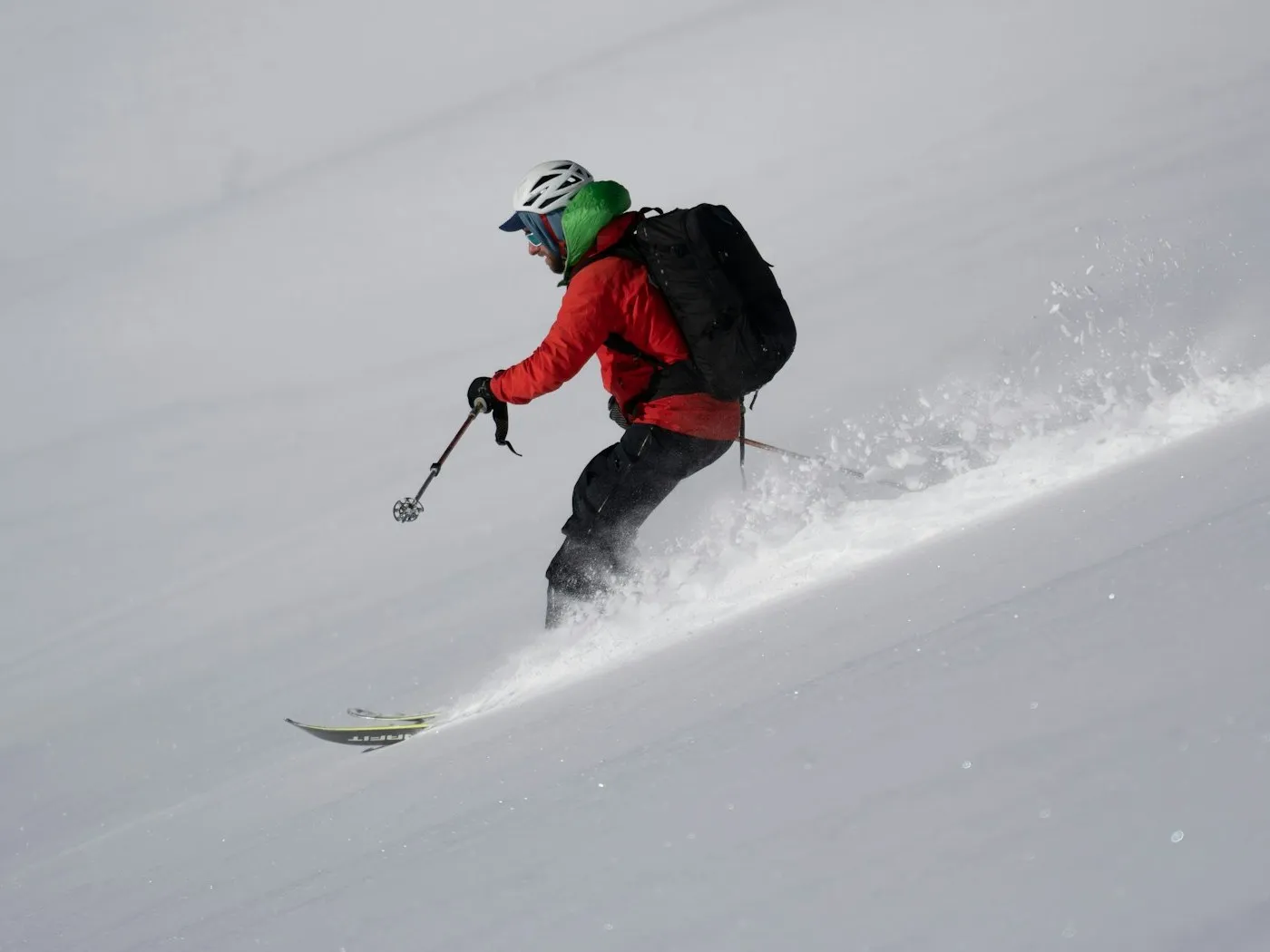
A backcountry ski pack is not a daypack that happens to hold skis. It is part of the rescue system you carry into avalanche terrain, which is why every pack here has a dedicated, separate pocket for a shovel and probe that you can reach in seconds without digging through your layers and lunch. The rest of what separates a touring pack from a regular one follows from the same logic: a way to carry skis or a board when you boot up a slope, a place for a helmet, hydration that survives the cold, and a volume that matches how far you are going.
Before any of that, the honest framing: a pack, even an airbag pack, is the last line, not the first. The decisions that keep backcountry travelers alive are reading the forecast, carrying and practicing with a transceiver, probe, and shovel, getting trained, and choosing terrain conservatively. The pack organizes that system and, in the case of an airbag, adds a margin. The six backcountry ski backpacks below sort by how and how far you tour, with airbag and non-airbag options called out clearly.
How these packs were chosen
Selection started with packs built for backcountry touring, meaning a dedicated avalanche-tool pocket, real ski or board carry, and helmet carry, rather than resort daypacks. Each pick is a current model, and volumes, weights, airbag systems, and US prices were checked against each brand’s product page and major retailers in June 2026. Several models the older guides listed are discontinued or renamed, and those were dropped in favor of current equivalents. Prices move, so treat the figures as a snapshot.
This guide is spec-based, not field-tested. Recommendations come from each pack’s published features and the touring use case it fits. Where a pack is an avalanche airbag, the writeup is explicit about what an airbag does and does not do.
The six packs at a glance
| Pack | Award | Volume | Weight | Airbag | US price |
|---|---|---|---|---|---|
| Black Diamond Dawn Patrol 32 | Best Overall | 32 L | 1.17 kg | No | ~$220 |
| Osprey Soelden 32 | Best Value | 32 L | 1.13 kg | No | ~$195 |
| BCA Float E2-25 | Best Airbag Pack | 25 L | 2.66 kg | Yes, electronic | ~$1,300 |
| Black Diamond Cirque 25 | Best Lightweight | 25 L | 0.86 kg | No | ~$220 |
| Patagonia Descensionist 37 | Best Multi-Day | 37 L | 1.5 kg | No | ~$279 |
| Mammut Pro 35 RAS 3.0 Ready | Best for Splitboarding | 35 L | 1.62 kg (pack) | RAS 3.0, sold separately | ~$339 pack |
Prices verified June 2026 and rounded. Every pack here has a dedicated avalanche-tool pocket for a shovel and probe.
Black Diamond Dawn Patrol 32
Best Overall
The Dawn Patrol 32 is the benchmark touring daypack because it gets the fundamentals right without excess. At 32 liters and 1.17 kg, around $220, it is the do-everything size for a full day tour, with a dedicated front avalanche-tool pocket that opens flat so you can deploy the shovel and probe fast, diagonal ski carry and vertical board carry, a helmet holder, and back-panel access so you can get to gear without setting the pack in the snow. It balances features, weight, and price better than anything else here, which is exactly what most backcountry skiers want from one pack.
Strengths
- Ideal 32 L do-everything volume
- Fast-access dedicated avalanche-tool pocket
- Ski and board carry plus helmet holder, fair weight and price
Tradeoffs
- No airbag option in this model
- Diagonal-only ski carry, no A-frame
- Mid-weight rather than ultralight
- Volume
- 32 L
- Weight
- 1.17 kg
- Carry
- Diagonal ski + vertical board
- Avy tool
- Dedicated pocket
- Price
- ~$220
Best as a single do-everything touring pack. Skip it if you need an airbag or the lightest possible setup.
Osprey Soelden 32
Best Value
The Soelden 32 delivers a full-featured touring pack at the lowest price among the do-everything options: 32 liters and 1.13 kg for around $195. It has a dedicated J-zip avalanche-tool pocket, all three ski and board carry options (A-frame, diagonal, and vertical board), a helmet carry, and Osprey’s usual build quality and warranty behind it. The women’s-specific version is the Sopris, in 20 and 30 liter sizes. There is no airbag option and the organization is a touch simpler than the premium packs, but for a skier who wants a complete, well-made touring pack without overspending, it is the value pick, and the women’s fit is a genuine plus.
Strengths
- Full feature set at the lowest do-everything price
- All three ski and board carry modes
- Women’s-specific Sopris version available
Tradeoffs
- No airbag option
- Organization simpler than premium packs
- Slightly less refined back access than the Dawn Patrol
- Volume
- 32 L
- Weight
- 1.13 kg
- Carry
- A-frame, diagonal, board
- Avy tool
- J-zip pocket
- Price
- ~$195
Best for a complete touring pack on a budget, and for a women’s fit. Skip it if you want top-tier organization or an airbag.
BCA Float E2-25
Best Airbag Pack
If you are buying an airbag, the Float E2-25 is the pick, because its electronic system solves the two biggest airbag headaches. A 25 liter pack at around 2.66 kg and $1,300, it uses an Alpride E2 supercapacitor system rather than a compressed-gas canister. The Alpride E2 supports multiple deployments per charge (it is certified for up to 100 inflations), with lithium AA batteries available for additional inflations, which makes it far easier to practice with than a single-shot canister, though not unlimited, and it is generally simpler to fly with as well. It has a dedicated avalanche-tool pocket and removable ski and board straps, and it undercuts the other electronic airbag packs by a few hundred dollars.
The honest part: an airbag reduces the chance of a deep burial, but it does not eliminate avalanche risk. It cannot protect against trauma from trees, rocks, or cliffs, it offers little help in a terrain trap or a deep secondary burial, and it only works if you deploy it in the moment you are caught. It is a margin on top of a transceiver, probe, shovel, training, and good terrain choice, not a substitute for any of them.
Strengths
- Electronic system: multiple deployments, practice freely
- Airline-friendly, no gas canister hassle
- Cheaper than rival electronic airbag packs
Tradeoffs
- Heavy and expensive, as all airbag packs are
- Battery needs charge management in the cold
- Only 25 L, tight for long days
- Volume
- 25 L
- Weight
- 2.66 kg
- Airbag
- Electronic (Alpride E2)
- Carry
- Removable ski + board straps
- Price
- ~$1,300
Best for the tourer committed to an airbag who wants to practice and fly with it. Skip it if the budget or weight is prohibitive, or treat the canister Float 22 (around $550) as the cheaper entry.
Black Diamond Cirque 25
Best Lightweight
For fast-and-light touring, where every gram you carry uphill counts, the Cirque 25 is the lightest pack here that still does the job. At around 0.86 kg, a clean 25 liter body for about $220, it strips the touring pack to essentials, with a dedicated avalanche-tool pocket and a removable diagonal ski carry you can leave at home to save more weight, aimed at skiers who move quickly and do not need to haul a full day’s worth of extras. The trade is capacity and padding: 25 liters and a minimal harness are right for efficient half-day and skin-track laps, not for hauling overnight gear.
Strengths
- Lightest pack here while keeping an avy pocket
- Clean, efficient design for fast touring
- Removable ski carry to shed more weight
Tradeoffs
- 25 L is tight for long or cold days
- Minimal harness padding under heavy loads
- No airbag option
- Volume
- 25 L
- Weight
- 0.86 kg
- Carry
- Removable diagonal ski
- Avy tool
- Dedicated pocket
- Price
- ~$220
Best for fast-and-light skiers counting grams. Skip it if you carry a lot or want a plush harness.
Patagonia Descensionist 37
Best Multi-Day
When the trip runs long (a hut tour, an overnight, a big objective day), the Descensionist 37 has the volume the smaller packs lack. At 37 liters and 1.5 kg, around $279, it swallows extra layers, food, and overnight or group gear while keeping a divided dedicated avalanche-tool pocket and all three ski and board carry options. It is still a clean, ski-focused design rather than a bloated expedition pack, so it tours well when full. For day tours it is more pack than you need, but for the bigger missions it is the right size here. It is available from Patagonia.com as of June 2026, though some retailers list it as closeout, so confirm current availability before buying.
Strengths
- 37 L handles hut trips and overnights
- Divided avalanche-tool pocket and full ski carry
- Tours well for its size
Tradeoffs
- Oversized for short day tours
- No airbag option
- Heavier than the day packs when loaded
- Volume
- 37 L
- Weight
- 1.5 kg
- Carry
- A-frame, diagonal, vertical
- Avy tool
- Divided pocket
- Price
- ~$279
Best for hut trips, overnights, and big days. Skip it for short laps where a 25 to 32 L pack is plenty.
Mammut Pro 35 Removable Airbag 3.0 Ready
Best for Splitboarding
Splitboarders have a specific need, carrying two ski-shaped halves and skins on the up and a full board on the down, and the Pro 35 is built for it with a dedicated splitboard carry mount that most touring packs lack. The Pro 35 Removable Airbag 3.0 Ready is a 35-liter splitboard-capable pack designed to accept Mammut’s Removable Airbag System 3.0, sold without the system included: the pack alone is about $339, the RAS 3.0 system adds about $479, and a compatible cartridge is sold separately. That keeps it flexible, since the same pack works as an airbag pack or a standard one, but the real cost depends on how you configure it. Weight climbs with the system too, from about 1.62 kg for the pack alone to 2.32 kg with the RAS unit and 2.63 kg once the cartridge is fitted. The canister system is lighter and cheaper than an electronic compressor but needs refilling after a deployment and can be flown only with airline approval.
Strengths
- Dedicated splitboard carry mount
- Removable airbag: run it with or without
- Solid 35 L volume for full board days
Tradeoffs
- Canister airbag needs refilling and is harder to fly with
- Pricing varies a lot by configuration
- Heavier than a non-airbag pack
- Volume
- 35 L
- Weight
- 1.62 kg pack / 2.32 kg with RAS
- Airbag
- Removable canister (RAS 3.0, sold separately)
- Carry
- Splitboard mount
- Price
- ~$339 pack / +$479 system
Best for splitboarders who want board-specific carry and airbag flexibility. Skip it if you ski rather than ride, or want an electronic airbag.
How to choose a backcountry pack
Volume
Match volume to trip length. A 20 to 25 liter pack is right for short day tours and sidecountry, holding the avalanche kit, water, and a layer. A 30 to 35 liter pack is the do-everything size, with room for extra layers, food, and a first aid kit on a full day. A 40 liter or larger pack is for hut trips and overnights. If you buy one pack, 30 to 32 liters covers the most ground.
Airbag or not
An airbag is a meaningful addition for committed backcountry travelers, but it is a personal cost-benefit call, not a requirement, and it changes nothing about the fundamentals. It adds significant weight and cost, and as covered above it reduces but does not remove burial risk. If you do go airbag, the main fork is canister versus electronic. Canisters are lighter and cheaper but need refilling after a deployment, and they can be flown only with airline approval and correct handling of the cartridge. Electronic systems cost and weigh more but deploy repeatedly on a charge, and they are usually simpler for air travel because they avoid compressed-gas cartridge rules, though you should still carry the manufacturer’s travel documentation and follow airline battery guidance. Either way, the airbag sits on top of the transceiver, probe, shovel, and training, which come first.
Ski and board carry
Decide how you carry. A-frame carry (one ski per side) is stable for booting steep, technical sections; diagonal carry (both skis across the back) is fast to rig for short carries; vertical or board carry holds a snowboard or splitboard flat. If you switch between booting and skiing often, a pack with more than one option is worth it; splitboarders should look specifically for board or splitboard carry.
Hydration and organization
Winter breaks hydration bladders, because the hose freezes. Many tourers carry an insulated bottle instead, stored upside down so ice forms away from the lid, or run an insulated-hose bladder and blow the water back after each sip. Beyond that, look at how the pack organizes: a separate avalanche-tool pocket is non-negotiable, and a goggle pocket, a way to reach the main compartment without dropping the pack in the snow, and ski-boot-friendly hipbelt buckles all make a difference on a cold day with gloves on.
Frequently asked questions
What size backcountry ski pack do I need?
Match volume to trip length. A 20 to 25 liter pack suits short day tours and lift-accessed sidecountry where you carry only the essentials and avalanche tools. A 30 to 35 liter pack is the do-everything size for full day tours, fitting extra layers, food, and a first aid kit alongside the avalanche kit. A 40 liter or larger pack is for hut trips, overnights, and big missions. When in doubt, 30 to 32 liters covers the most situations.
Do I need an avalanche airbag pack?
An airbag can help but is not required, and it is not a substitute for the basics. Statistically an airbag improves the odds of staying near the surface in a slide, which reduces burial risk, but it does not eliminate it: it cannot prevent trauma against trees or rocks, it does not help in a terrain trap or a deep secondary burial, and it must be deployed in the moment. An airbag is an addition to a transceiver, probe, shovel, training, and conservative terrain choice, never a replacement for them.
What is the difference between a canister and an electronic airbag?
Both inflate the same kind of airbag; they differ in how. Compressed-gas systems use a refillable or replaceable canister of gas, are lighter and cheaper, but the canister needs refilling after each deployment and can be flown only with airline approval. Electronic systems use a battery and a supercapacitor to drive a compressor, so you can deploy many times on a charge and practice freely, and they are usually simpler to fly with because they avoid compressed-gas cartridge rules, though they cost more and weigh a bit more. Frequent flyers and people who want to practice often lean electronic.
How does a backcountry pack carry skis or a snowboard?
Three common ways. A-frame carry straps a ski to each side of the pack, which is stable for booting up steep terrain. Diagonal carry runs both skis across the back corner to corner, which is quick to set up and good for short carries. Vertical or board carry holds a snowboard or splitboard flat against the back. Many packs offer more than one option; pick based on whether you carry skis or a board and how often you switch between riding and booting.
Can I use a hydration bladder in the backcountry in winter?
You can, but the hose freezes easily, which is why many tourers skip the bladder in deep cold and carry an insulated bottle instead, often upside down so any ice forms at the bottom rather than the lid. If you do run a bladder, look for an insulated hose and bite valve, blow the water back into the bladder after each drink so the hose is empty, and route the hose inside your jacket. Below about 20 degrees Fahrenheit, a bottle is the more reliable choice.
The short version
For one pack to do almost everything, the Black Diamond Dawn Patrol 32 is the benchmark, and the Osprey Soelden 32 matches most of it for around $190.
From there, match it to your touring: the BCA Float E2-25 if you want an airbag you can practice with and fly, the BD Cirque 25 for fast-and-light days, the Patagonia Descensionist 37 for hut trips and overnights, and the Mammut Pro 35 for splitboarders. Whichever you choose, remember the pack is the last line, not the first. The gear that keeps you alive in avalanche terrain is the forecast, the training, and a practiced transceiver-probe-shovel kit; the Health & Safety section and the rest of the ski gear guides cover the system the pack is part of.
Specifications and prices in this guide were verified against current brand information and major US retailers in June 2026. Models, volumes, and prices change; confirm current details on the brand’s product page before buying. If you find an error in this guide, please email corrections@slopehound.com.