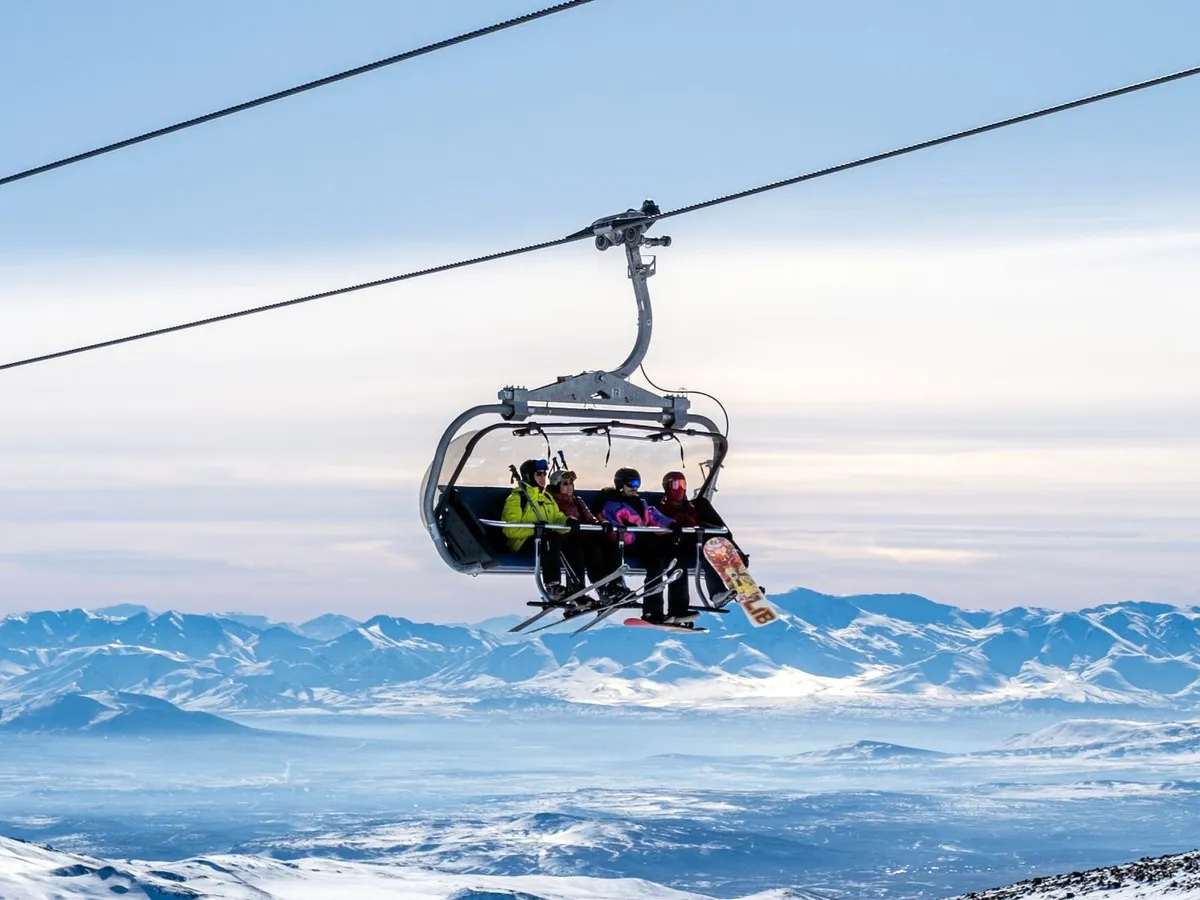
You spend a lot of time on lifts. This is not a complaint. The ride up is when you catch your breath, plan the next line, or stare into a valley and remember why you drove five hours to get here. But the machine you are riding shapes the whole day: how many runs you get, how cold you get on the way, and whether the mountain is even turning when the wind kicks up in the afternoon.
Most lifts look like variations on the same thing until you know what to watch for. Here are the main types of ski lifts you will ride at a US resort, and what to know about each one before you get in line.
Magic carpets
A magic carpet is a moving conveyor belt at snow level, often used in learning areas. It carries you uphill while you stand with your equipment on. Watch the entrance and exit before joining the line, and ask the attendant how to load if it is your first time. Even a slow lift needs a clear exit so the next person has somewhere to go.
Rope tows
A rope tow pulls riders uphill while their skis or board stay on the snow. Some use a bare rope; others have handles. Holding on takes effort, so a long tow can tire your hands before the run starts. Ask the attendant about loading, unloading, and what to do if you let go or fall. Keep loose straps and clothing secured around moving equipment.
T-bars and poma lifts
T-bars tow two riders with a bar behind their thighs; a platter lift tows one with a disc between the legs. Keep standing on your skis or board rather than trying to sit on the bar. Ask the operator for instructions if it’s unfamiliar, including what to do if you fall. A snowboard lesson can include practice with surface lifts before you need one farther up the mountain.
Fixed-grip chairs
A fixed-grip chair stays attached to the cable as it passes through the station. Unlike a detachable chair, it does not slow independently for boarding. Watch a few groups load and tell the attendant if you need help. Remove your backpack before riding, secure loose equipment, and follow the posted loading and restraint-bar instructions. Knowing what to expect is more useful than trying to rush onto a chair.
High-speed detachable chairs
A detachable chair releases from the main cable and slows inside the station, giving you more time to load and unload. It then reconnects to the faster cable for the uphill trip. Follow the lift signs and operator’s directions, and coordinate with the other passengers when using the restraint bar.
Bubble chairs
A bubble chair adds a clear cover over an open chair, sometimes with heated seats. The cover provides shelter during the ride, which can be welcome on a cold, windy day. Follow the operator’s instructions for loading and for using the cover and restraint bar.
Gondolas
A gondola carries riders in enclosed cabins that circulate around a cable system. The shelter can make the ride more comfortable in cold weather, and you usually remove your skis or board before boarding. Equipment storage and cabin size vary, so follow the loading instructions rather than assuming every cabin works the same way. Take a moment to identify your gear before unloading; matching skis in the same rack can be surprisingly easy to mix up.
Aerial trams
An aerial tram shuttles a large cabin between stations instead of circulating a stream of small cabins. That makes boarding feel more like waiting for a departure: several groups may gather for the next trip. Check the return time and the trails served before boarding. A lift name does not tell you whether the terrain at the top matches your ability, or whether a route leaves the resort boundary.
Chondolas
A chondola combines chairs and enclosed gondola cabins on the same lift. It gives riders a choice of carrier, but the queues and boarding arrangements depend on the installation. Follow the signs for the carrier you want rather than changing lanes at the loading point.
When the wind shuts it down
Wind holds depend on the lift, its exposure, and the operator’s limits. There isn’t a single wind speed that tells you which type will run. Check the resort’s current lift status before traveling, and have another route in mind if the lift you planned to use closes.
What “uphill capacity” means for your line
Uphill capacity describes how many riders a lift can transport in an hour under specified operating conditions. It is different from how fast an individual chair travels. Seat count, spacing, operating speed, and how fully carriers load all matter. A fast ride can still have a long line if many trails funnel into the same station. For trip planning, look at the trail map for alternative routes as well as the headline capacity.
What the lift mix tells you
Use the lift map to plan a connected day. Find the lift serving terrain you can ski comfortably, check whether the return route is within your ability, and note any lift you must catch to get back to your starting base. A longer chair ride may be a fair trade for a quieter part of the mountain. The useful question is where the lift takes you and how you get home.