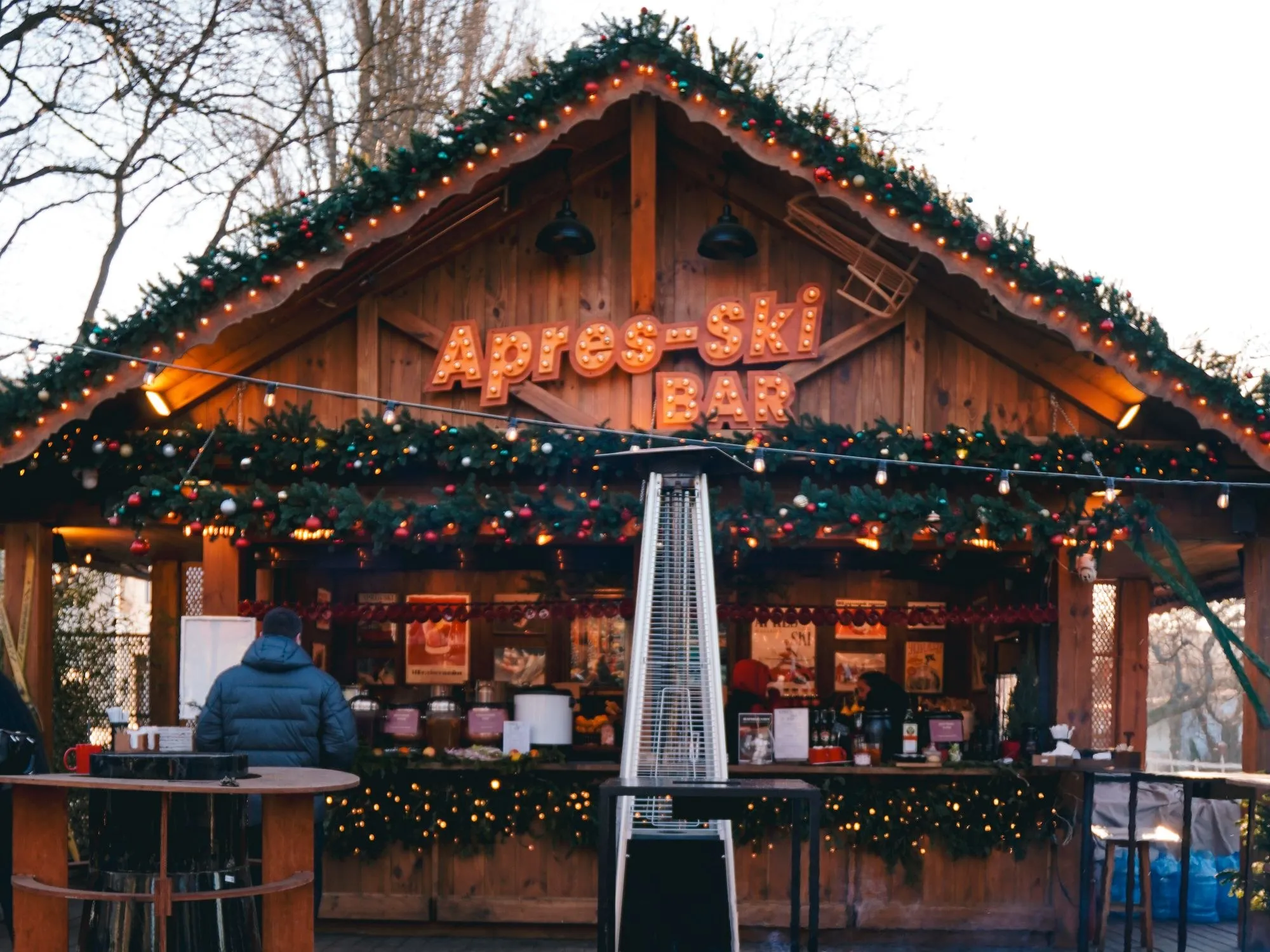
Apres-ski means “after skiing,” and that plain translation is most of the answer. It is the part of the day that starts when the runs are done: a beer handed over while your boots are still buckled, a sunny deck, goggles pushed up, legs aching in the good way, the one run that went right retold until it improves. You do not have to earn it with a perfect day. You stop skiing and start sitting, still in your gear, with the people you rode with.
Where the word comes from
The name is French, and it is exactly what it sounds like. “Apres” means “after,” so apres-ski is simply “after skiing.” Dictionary.com dates the first recorded use to the early 1950s, which lines up with the story of the thing itself: as commercial skiing spread through the Alps and then the rest of the world in the 1950s, the French put a name to the social ritual that had always trailed a day on the snow. The skiing part is old, thousands of years old in Scandinavia, but apres-ski as a named, deliberate scene is a postwar invention, and it rode over to the US with the resort boom.
What it looks like here
In practice it wears a few different outfits. There is the base-area bar version, the one the postcards use: a slopeside deck packed with people still in ski boots, a speaker going, the bar three deep by four o’clock. Aspen has the Ajax Tavern, right at the bottom of the Silver Queen Gondola, which The Little Nell more or less calls the exact picture in your head when you say the words. Vail has the Red Lion, a Vail Village fixture that opened in 1963, only weeks after the mountain itself. Killington runs the Wobbly Barn, a steakhouse that turns into a nightclub, which is about as Killington as it gets.
Then there is the version that costs nothing. In Montana, the local guide Distinctly Montana rattles off the state’s real apres rooms: the Hellroaring Saloon at Whitefish, Muley’s Pub at Blacktail with its view over Flathead Lake, the Snow Creek Saloon down in Red Lodge, which it calls a little rough and tumble and a whole lot of fun. None of these are velvet-rope places. And below even that is the truest apres of all, the tailgate in the parking lot: a cooler in the truck bed, a camp chair in the slush, boots finally off. Some of the best apres you will ever have is a gas-station burrito and a warm can against the tailgate with your friends. The hot-tub-and-beer version back at the condo counts too. Apres is less a place than a decision.
Watch out for
Two things worth knowing before you commit to it. Full apres and a hard afternoon of skiing do not mix, and you get to pick one. The two-beer stop that becomes four means your legs are cooked and your judgment is softer for the last runs, which is exactly how end-of-day injuries happen. And the drinks land harder than they do at home. A day of hard exertion, thin dry mountain air, and the dehydration that rides along with both mean the first beer hits like the second, and you still have to drive down a snowy road afterward. So pace it. Drink water between rounds, and know which version of apres you are signing up for.
What it is for
Here is what apres does, and why it has outlived every trend the sport has cycled through. It closes the loop. A ski day is a lot of solitary effort, just you and the fall line and your own two feet, and apres is where it turns back into something shared. You compare notes, you lie a little about the cliff you did not air, you sit still and let the tiredness settle in. The skiing is the reason you drove up. The apres is the part you will remember.