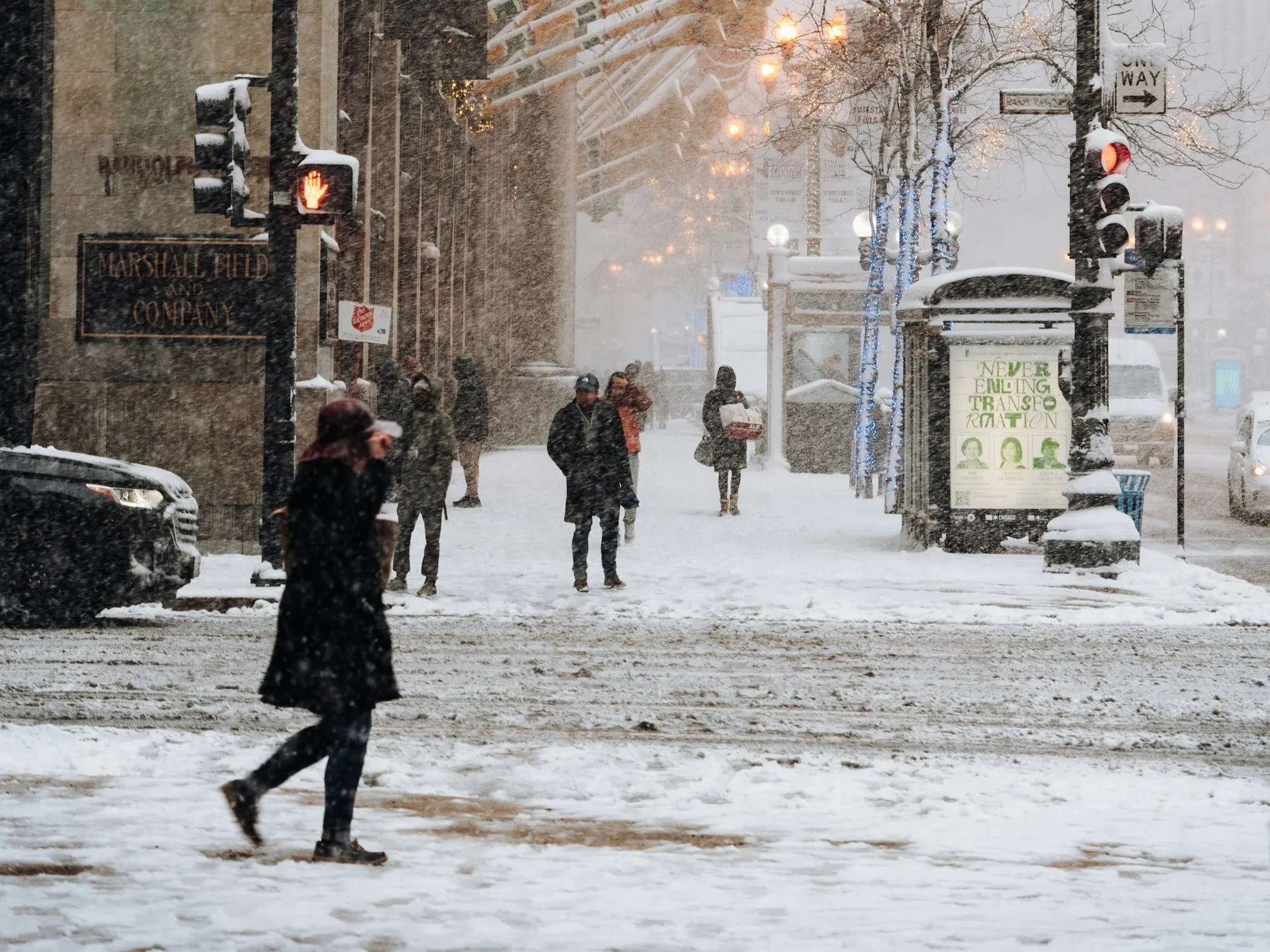
Chicago winter is not just “cold.” It is a city that keeps running through weather that would close a ski resort, which means you cannot dress for it the way you dress for a powder day, and you cannot dress for it the way you dress for a mild one either. You will be walking to the L, standing on an open elevated platform while a train is four minutes out, then stepping into a building heated like a sauna, and then back out again. The trick is a system you can open and close, and the discipline to pack for the bad days, not the average one. Whether you are here for meetings, a layover, a long weekend, or a connection on the way to a Midwest hill, here is what to wear.
What Chicago winter does
Start with the real numbers, because they are milder and nastier than people expect. Per the National Weather Service, the average January day at O’Hare runs a high of 31.6 degrees and a low of 18.8, with a monthly mean of 25.2 and about 11.3 inches of snow for the month. That is the average, and on an average day a good coat and a hat are plenty.
The cold snaps are the problem, and they are what you pack for. Chicago’s all-time record low is 27 below zero, set on January 20, 1985, when the wind chill hit 60 below. You do not need a record to suffer: during a stretch in January 2025, the NWS clocked wind chills of 25 to 35 below zero across the area with actual air temperatures of 5 to 15 below. That is the Chicago that earns its reputation, and it shows up most winters for at least a few days. Add the lake: cold air moving over the relatively warm water of Lake Michigan picks up moisture and dumps narrow bands of lake-effect snow, sometimes 2 to 3 inches an hour, which is a Great Lakes winter special the forecast does not always call in advance.
Wind is the whole story here. The NWS wind chill math is blunt: at 0 degrees with a 15 mph wind, the wind chill is 19 below, and exposed skin can freeze in about 30 minutes at that number. Bright sun buys you back a little, raising the felt temperature by 10 to 18 degrees, which is why a sunny 10-degree day downtown feels survivable and a gray, windy one does not.
The urban layering system
This is the same base-mid-shell logic a skier already knows, tuned for a city instead of a slope. On the slope you are generating heat the whole run. In the city you are mostly standing still in the wind, then overheating indoors, so the priority shifts to wind blocking and to layers you can strip fast.
Start with a base layer that is not cotton, merino or synthetic, the same rule as how to layer for the cold lays out. Add an insulating mid layer, a fleece or a light down or synthetic puffy, for the standing-around warmth. Then the piece that matters most in Chicago: a windproof outer shell. Wind is what makes the lake city brutal, and a coat that blocks it changes everything. Under it, dress so you can open the front and pull off the hat the second you get on a warm train, because you will, and a soaked base layer from indoor sweat is how you end up cold outside.
Then the part flatlanders underrate and skiers do not: your feet. Sidewalks go to sheet ice and slush lakes at the curbs, and street shoes are a bad afternoon waiting to happen. Real winter boots with grippy soles, from a brand like Sorel, plus a wool sock, the merino kind Smartwool and others make, keep your feet warm and upright. Cold, wet feet end a Chicago day faster than cold hands.
The parka question
Do you need a big expedition down parka for Chicago? For a short trip, usually not. A windproof shell over a good mid layer covers the vast majority of winter days in the 20s and 30s, and it packs down for the plane. Where a real parka earns its place is the deep freeze and the long stay: if you live here, or your trip lands on one of those 5-below stretches, a heavy insulated parka that covers your hips and seals at the wrists and neck is the difference between walking to dinner and calling a car. That is a different category of coat, the kind covered in best winter coats for extreme cold, and it is worth owning if Chicago is home. For a two-day visit, layer instead and save the suitcase space.
Watch out for
A few ways people get Chicago wrong. They dress for the thermometer and ignore the wind, then get caught at 10 degrees that feels like 10 below on an exposed platform. They wear the right coat and the wrong shoes, and spend the trip slipping on ice with wet socks. And they overpack the heaviest gear they own, then roast in it on the train and in every restaurant and lobby, because Chicago heats its indoor spaces hard. The fix for all three is the same: block the wind, protect your feet, and build the outfit so you can shed half of it in ten seconds when you step inside.
The bottom line
Chicago in winter rewards a system, not a single heroic coat. Base layer that is not cotton, a mid layer for warmth, a windproof shell over the top, real boots, and wool socks, all of it built so you can open up the moment you are indoors. Pack for the cold snap and you will be comfortable on the average day by default. Do it right and the city in winter is a great place to be, right up until the next lake-effect band rolls in.